



Reverse osmosis (RO) membrane works on the principle of pressure-driven reverse permeation.
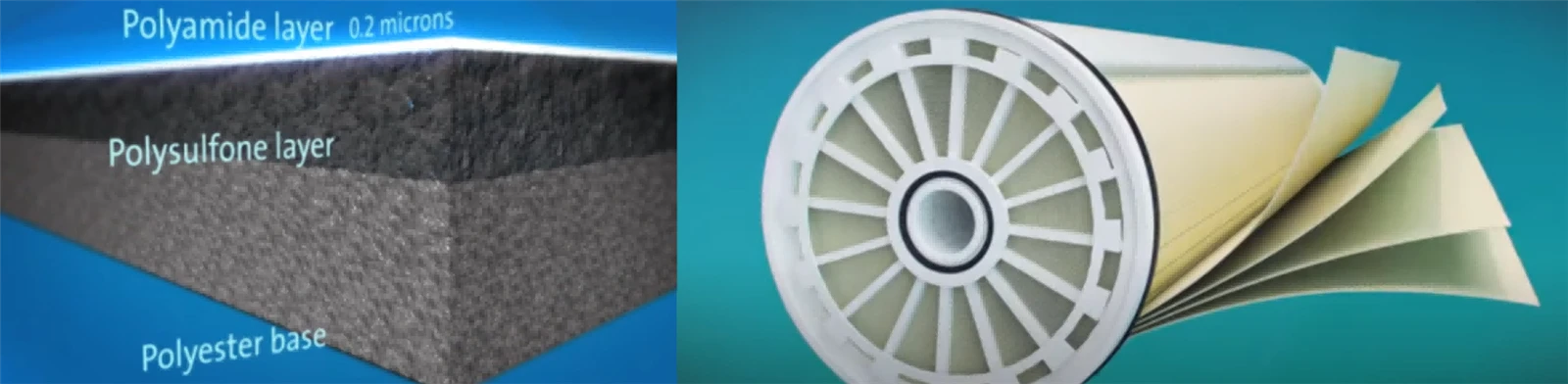
Naturally, when a dilute solution and a concentrated solution are separated by a semipermeable membrane, water molecules move spontaneously from the dilute side to the concentrated side until osmotic pressure balance is reached. For reverse osmosis, external pressure higher than the osmotic pressure is applied, forcing water molecules to flow backward from the concentrated raw water side to the pure water side.
The RO membrane has an extremely small pore size, generally 0.1–1 nanometers. It only allows small molecules such as water to pass through, while effectively retaining dissolved salts, organics, bacteria and viruses.
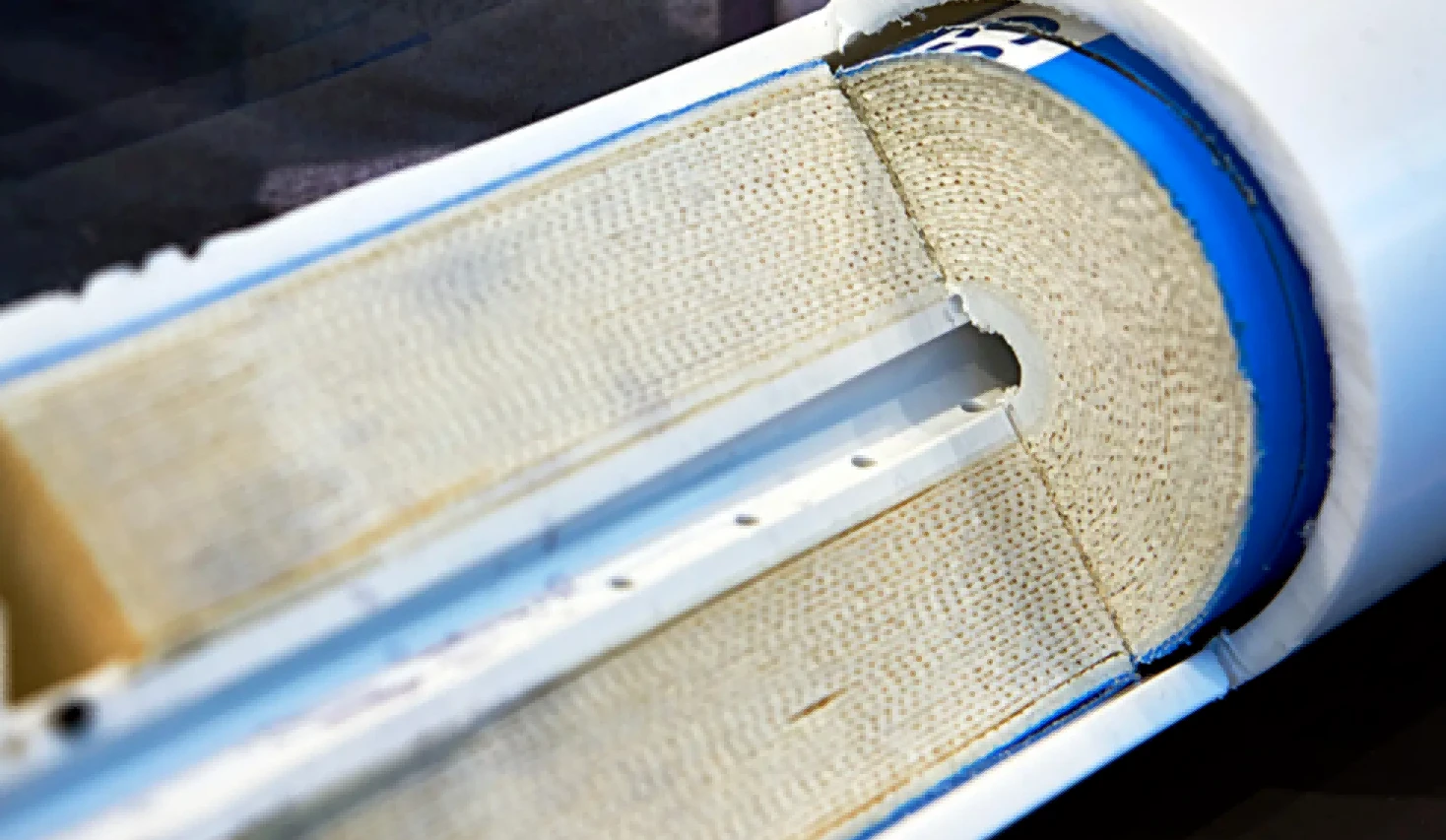
Two core mechanisms support its selective permeation:
- Sieving effect: The microporous structure screens substances by molecular size. Small water molecules pass through while larger contaminants are blocked.
- Solution-diffusion model: Water molecules dissolve into the membrane material and diffuse across the active layer under pressure. Most impurities have low solubility and slow diffusion speed inside the membrane, so they cannot penetrate.
With this principle, reverse osmosis membranes efficiently remove contaminants from water for purification and desalination. They are widely used in seawater desalination, pure water production, wastewater treatment and other water treatment projects.