



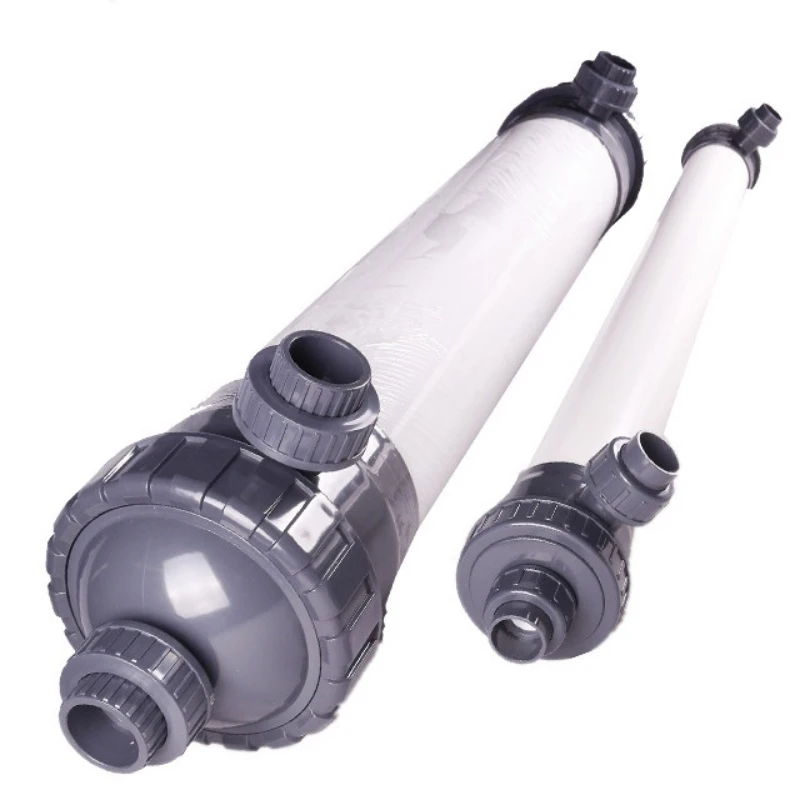

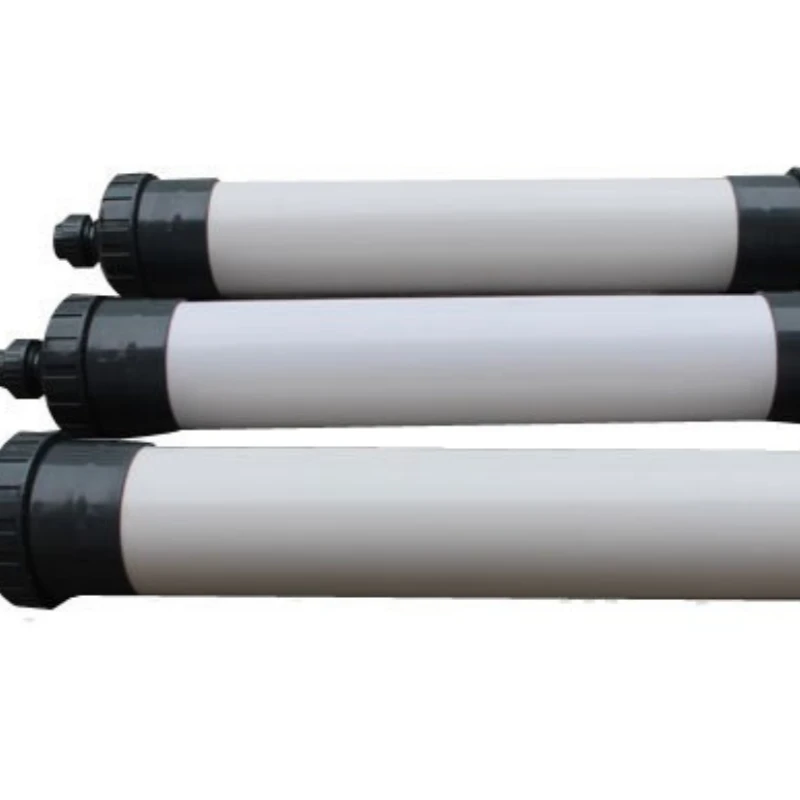
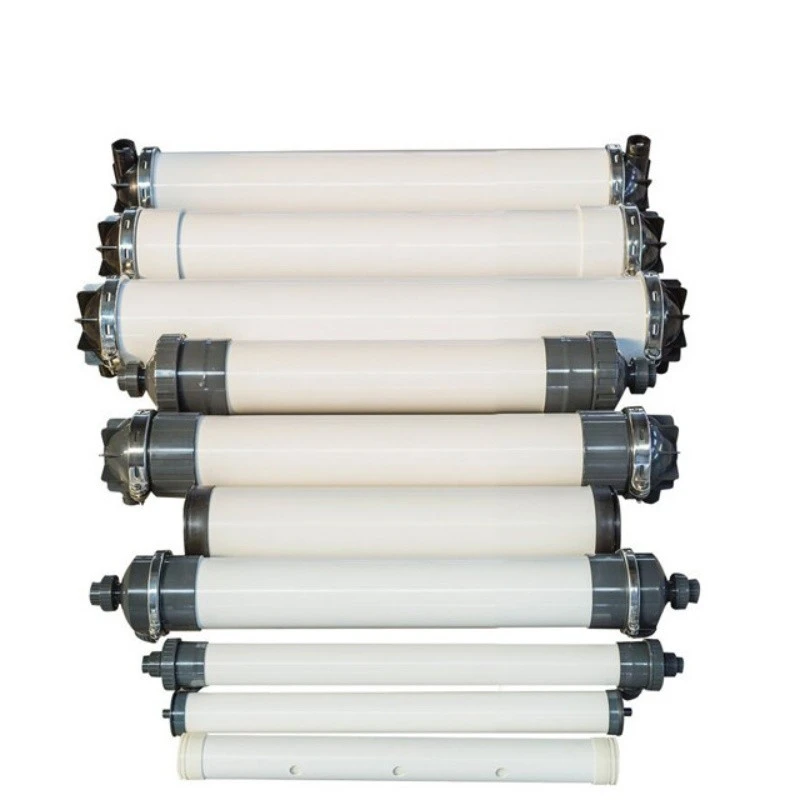
Fujian Huamo Technology Co., Ltd. is one of the most reliable manufacturers and suppliers of pvdf uf membrane in China. If you're going to wholesale bulk pvdf uf membrane made in China, welcome to get catalog and price list from our factory. All custom made products are with high quality and competitive price. Also, OEM service is available.
Product Details
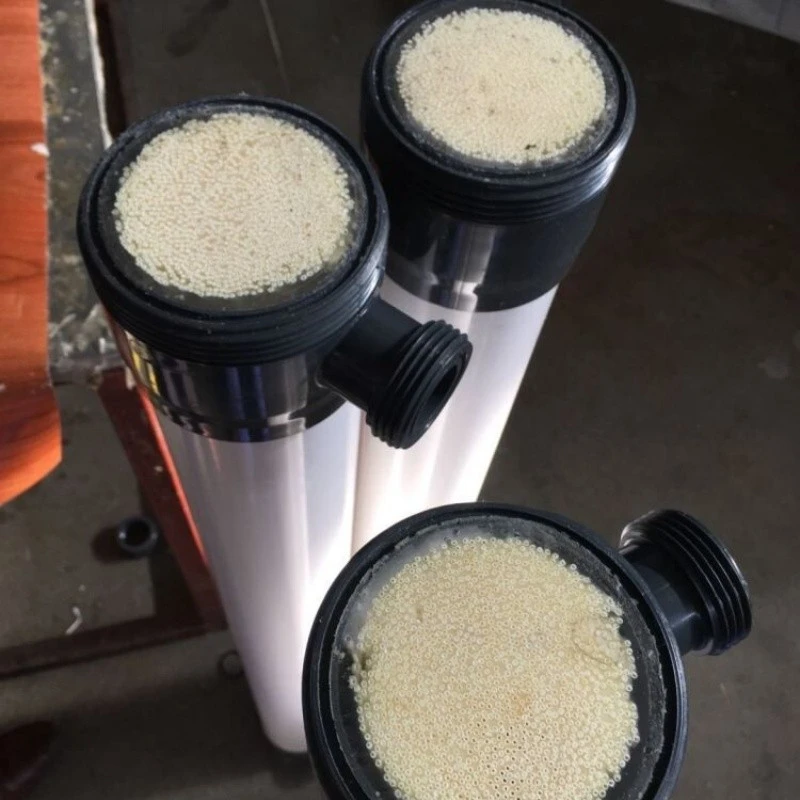
PVDF UF membrane HM160 module is constructed with hydrophilic PVDF hollow fibers, potted in a UPVC housing with food-grade epoxy resin. In this configuration, feed water enters the fiber lumens, and permeate flows outward through the membrane wall. This inside-out flow pattern effectively traps suspended solids, colloids, and bacteria on the inner surface of the fibers. One of the main benefits of this design is its exceptional backwash efficiency; foulants are easily dislodged and flushed from the fiber lumen.
The inside‑out configuration allows effective backwash. Routine backwash with permeate or air‑scour removes accumulated foulants. PVDF withstands chlorine up to 2000 ppm (short‑term) and operates continuously at pH 2–12. The membrane runs in dead‑end or cross‑flow mode depending on feed turbidity.
Applications: RO pretreatment, municipal drinking water, industrial wastewater reuse, food and beverage clarification.


Product Specifications
|
Model |
HM160 (PVDF version) |
|
Membrane material |
Hydrophilic PVDF |
|
Filtration mode |
Inside-out |
|
Nominal pore size |
0.05–0.1 µm |
|
Membrane area |
15 m² |
|
Fiber ID / OD |
1.0 mm / 1.6 mm |
|
Housing material |
UPVC |
|
Max. operating pressure |
0.3 MPa (43 psi) |
|
Max. TMP |
0.2 MPa (30 psi) |
|
Backwash pressure |
≤0.2 MPa |
|
Backwash flow |
100–200 L/m²·h |
|
Operating temperature |
5–40 °C |
|
pH – continuous |
2–12 |
|
pH – cleaning |
1–12 |
|
Product water turbidity |
≤0.1 NTU |
|
Product water SDI₁₅ |
≤3.0 |
|
Bacteria removal |
≥6 log |
|
Virus removal |
≥4 log |
|
Design flux |
40–120 L/m²·h (0.1 MPa, 25 °C) |
|
Dimensions (L × OD) |
1000 mm × 160 mm |
|
Connection |
DN32 / DN40 flange |
Why Choose the HM160 PVDF UF Membrane
Product Advantages
HM160 PVDF UF module stands out for its flexible inside-out design, which simplifies cleaning and resists particle packing. Its high-performance hydrophilic PVDF membrane offers superior resistance to oxidation and fouling. The option for dry storage provides flexible logistics, reducing the need for preservative handling. This module is a powerful tool for RO pre-treatment, drinking water production, and industrial reuse, representing an ideal combination of durability, efficiency, and adaptability
Company Advantages – HUAMO GROUP
• 100% integrity testing (pressure decay) on each module.
• Exported to North America, Europe, Southeast Asia, Africa, South America.
• One‑stop supply: UF, RO, housings, EDI, FRP tanks.

FAQ
Q1: HM160 PVDF vs HM160 PAN/PES – what is the key difference?
A: PVDF has better oxidation resistance and tolerates higher chlorine (2000 ppm) during cleaning. PAN and PES are more hydrophilic but less resistant to oxidants. PVDF is preferred for wastewater and high‑fouling applications.
Q2: How does temperature affect the flux of the PVDF UF membrane HM160 membrane?
A: Water viscosity decreases with higher temperature, increasing flux. At 0.1 MPa, design flux is 40–120 L/m²·h at 25 °C. For every 1 °C below 25 °C, flux drops approximately 2–3%. Use the temperature correction curve provided in the technical manual to adjust operating parameters.
Q3: How does the HM160 cope with iron or manganese in the feed?
A: Tolerates Fe ≤0.5 ppm and Mn ≤0.1 ppm. Higher levels require pre‑oxidation and media filtration upstream. If fouling occurs, a 1–2% citric acid CIP effectively removes metal oxide deposits.
Q4: What cleaning solutions are recommended for PVDF?
A: For organic/biofouling: 0.05% NaClO + 0.1% NaOH (pH 10–12). For scale: 1–2% citric acid or 0.1% HCl (pH 2–3). Flush thoroughly after cleaning.
Q5: What typical water recovery can be expected?
A: Dead‑end: 90–95%. Cross‑flow: 80–90%. Recovery depends on feed quality and flux; consult the technical manual for site‑specific corrections.