



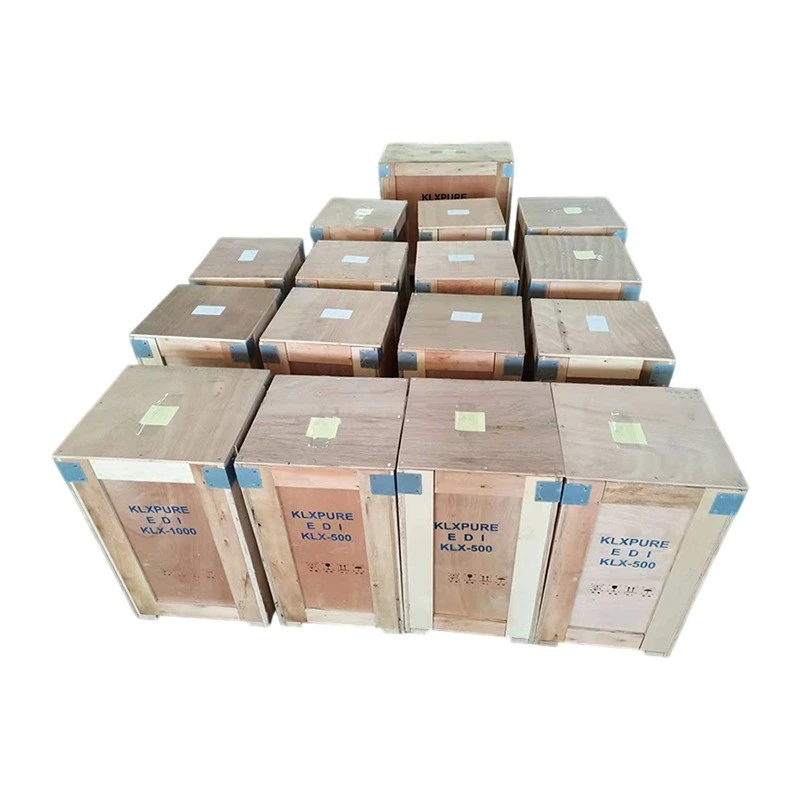
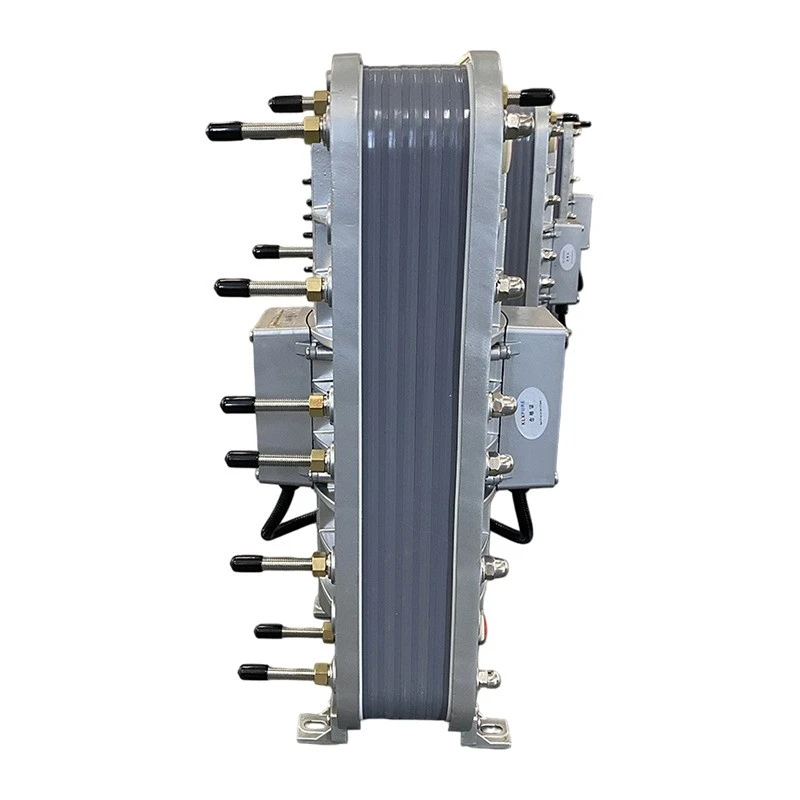


Fujian Huamo Technology Co., Ltd. is one of the most reliable manufacturers and suppliers of industrial pure water system edi module in China. If you're going to wholesale bulk industrial pure water system edi module made in China, welcome to get catalog and price list from our factory. All custom made products are with high quality and competitive price. Also, OEM service is available.
Product Details
The Industrial Pure Water System EDI Module is engineered for high-purity water production lines where continuous ion reduction and conductivity stabilization are required after reverse osmosis treatment. By combining ion exchange media, selective membranes, and direct current electrical operation, the module continuously removes residual ionic contaminants from RO permeate without stopping the system for chemical regeneration.
This type of EDI water purification module is widely adopted in industrial environments where ultrapure water quality directly affects manufacturing stability, cleaning precision, or product consistency. The system is commonly integrated into semiconductor fabrication plants, precision electronics workshops, pharmaceutical utilities, laboratory water systems, photovoltaic production lines, and industrial process water facilities.
Internal Structure of the EDI Module
The Industrial Pure Water System EDI Module contains alternating compartments separated by ion-selective membranes. Mixed ion exchange resin is filled inside these compartments to capture dissolved ionic substances from the feed water stream.
Key internal sections include:
Working Resin Zone
This section removes the majority of dissolved ions carried over from the RO system.
Polishing Resin Zone
This section further reduces difficult-to-remove weak electrolytes and residual ionic traces, helping improve final water resistivity.
Concentrate Chamber
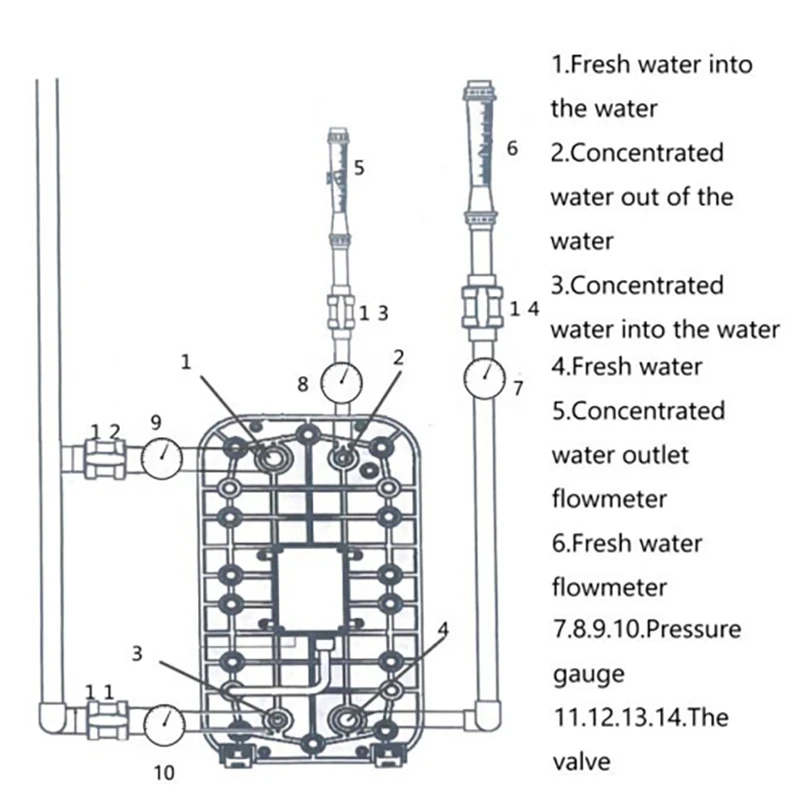
Separated ions are continuously transported into concentrate channels and discharged from the module.
This operating mechanism allows the module to maintain continuous deionization performance while minimizing interruption to industrial production systems.
Product Specifications
Model | KXA-50 | KXA-100 | KXA-200 | KXA-300 | KXA-400 | KXA-500 | KXA-600 | KXA-700 |
Water Production Flow m3/h | 0.3-0.7 | 0.5-1.4 | 1.5-2.5 | 2.5-3.5 | 3-4.5 | 5-7.8 | 6-8.5 | 7.5-9.5 |
Recovery Rate % | 90-95 | 90-95 | 90-95 | 90-95 | 90-95 | 90-95 | 90-95 | 90-95 |
Water Resistivity MΩ• cm | 15-18.25 | 15-18.25 | 15-18.25 | 15-18.25 | 15-18.25 | 15-18.25 | 15-18.25 | 15-18.25 |
Difference Between EDI and Mixed Bed Systems
Traditional mixed bed deionizers rely on acid and alkali chemicals to regenerate exhausted resin. In contrast, the EDI pure water module performs electrical regeneration continuously inside the membrane stack.
Compared with conventional mixed bed systems, EDI technology offers several operational differences:
Reduced handling of regeneration chemicals
Lower interruption frequency during operation
Stable conductivity control during continuous production
Simplified integration into automated water treatment systems
Reduced wastewater generated from chemical regeneration procedures
For industrial facilities operating continuously, EDI systems are commonly installed as an alternative polishing stage after reverse osmosis equipment.

FAQ
Q: Why does EDI module current suddenly increase or decrease during operation?
A: Abnormal current changes are usually related to inlet water quality or system connection issues. If the inlet water conductivity rises sharply, more ions will enter the module, leading to increased current; if the flow channel is blocked or the water supply is insufficient, the ion concentration in the module will decrease, causing current to drop. In addition, poor electrode contact, aging power components, or module insulation damage can also cause unstable current. It is necessary to check inlet water quality, flow status and electrical connections one by one for troubleshooting.
Q: How often does an EDI module need to be chemically cleaned?
A: There is no fixed cleaning cycle, and it needs to be judged based on actual operating conditions. For systems that operate stably all year round with qualified inlet water quality, chemical cleaning once every 6-12 months is usually sufficient. If the inlet water quality fluctuates frequently or the front-end reverse osmosis performance is degraded, cleaning may be required every 3-4 months. When the inlet and outlet pressure difference increases by 15% compared to the initial operation, or the product water resistivity drops by more than 10%, it indicates that cleaning is required in time.
Q: Can EDI module operate continuously for a long time without shutdown?
A: Yes, one of the core advantages of EDI technology is continuous automatic operation. Unlike traditional mixed bed processes that require shutdown for resin regeneration, EDI modules can operate continuously for a long time as long as the inlet water quality meets the standards and operating parameters are stable. Planned shutdowns for routine maintenance and inspection every 3-6 months are sufficient, which will not affect continuous industrial production.