



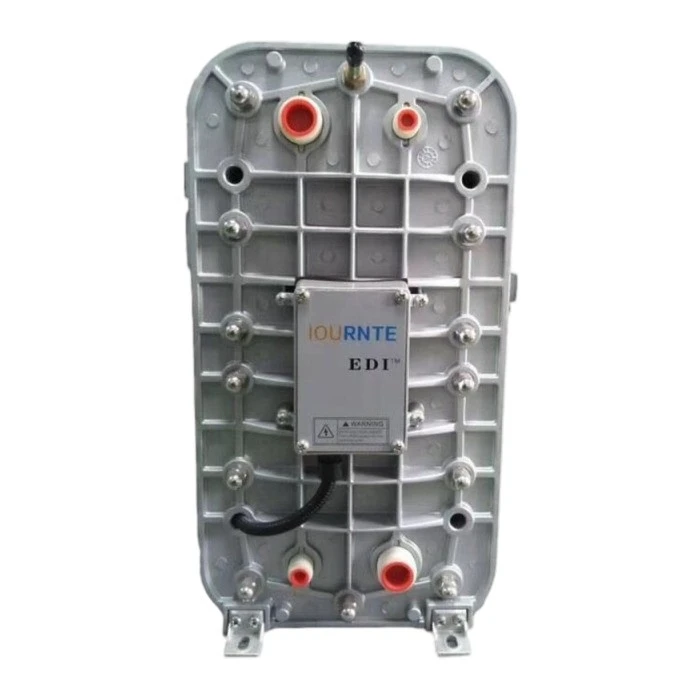
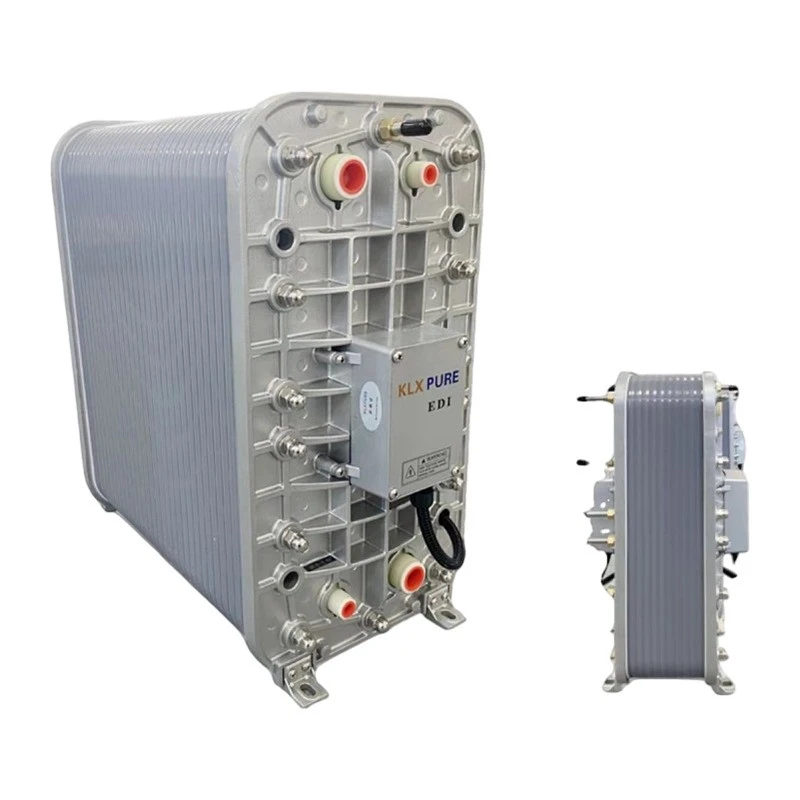
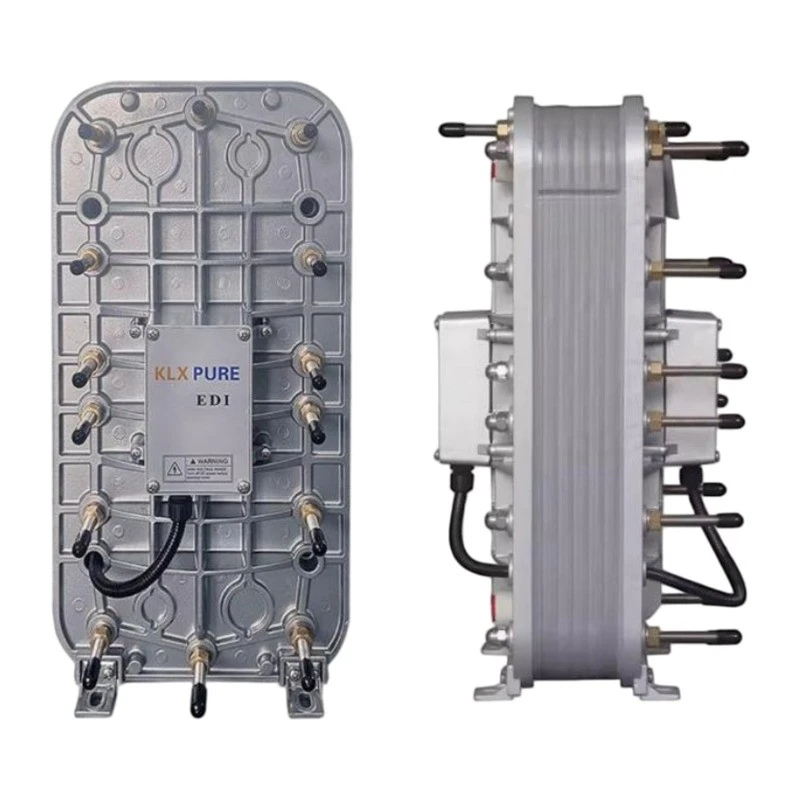
Fujian Huamo Technology Co., Ltd. is one of the most reliable manufacturers and suppliers of automated edi system in China. If you're going to wholesale bulk automated edi system made in China, welcome to get catalog and price list from our factory. All custom made products are with high quality and competitive price. Also, OEM service is available.
Product Details
Automated EDI system is an advanced continuous electrodeionization solution designed to produce high-purity water directly from RO permeate without the need for chemical regeneration. It is widely used in ultra-pure water applications where stable resistivity, low maintenance, and continuous operation are required. The system is particularly suitable when feed water meets strict quality conditions such as conductivity of 1–10 μS/cm, low CO2, hardness, silica, TOC, and trace metals as specified in KXA-100 requirements.
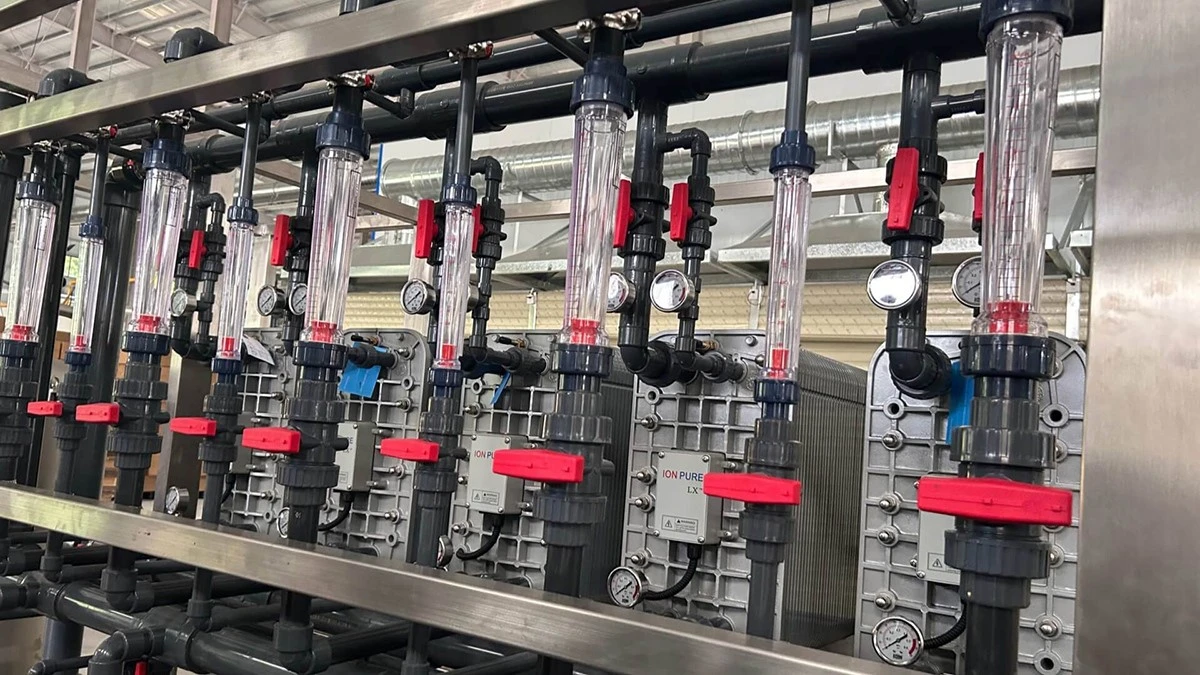
The working principle of the EDI membrane block combines ion exchange resin and ion-selective membranes under a direct current electric field. Dissolved ions in the water are continuously removed as cations and anions migrate through the resin bed toward respective electrodes. Unlike traditional ion exchange systems, the resin is continuously regenerated by the electric field, eliminating the need for acid or caustic chemicals. As a result, the system delivers stable high-purity water with consistent quality and uninterrupted operation.

EDI Feed Water Specifications & Engineering Significance
No. | Parameter | Limit / Requirement |
1 | Feed Water Conductivity | 1 - 10 uS/cm |
2 | Total Carbon Dioxide (CO2) | < 5 ppm |
3 | Total Hardness | < 0.5 ppm |
4 | Reactive Silica (SiO2) | <= 0.5 ppm (Optimum <= 0.2) |
5 | Total Organic Carbon (TOC) | <= 0.5 ppm |
6 | Free Residual Chlorine | <= 0.03 ppm |
7 | Iron & Manganese (Fe/Mn) | <= 0.01 ppm |
How Is the Standard Water Production Capacity of the KXA-100 Determined?
The standard permeate flow rate of automated EDI system use KXA-100 EDI module is established based on long-term operational testing under stable design conditions, including qualified RO feed water quality, standard operating temperature, recommended voltage/current range, and optimized hydraulic flow distribution.
Under standard operating conditions, the automated EDI system use KXA-100 delivers a nominal ultrapure water production capacity of 1000 L/H (1 m³/h), while the actual operating flow range can vary between 0.5–1.4 m³/h depending on factors such as feed water conductivity, temperature, system recovery settings, and incoming RO permeate stability.
The reason we specify both a "standard production flow" and an "operating flow range" is because EDI performance is influenced by real working conditions in different industrial applications. For example:
Higher feed water temperature generally improves ion migration efficiency and water output.
Lower RO permeate conductivity helps reduce electrical load and stabilizes ultrapure water production. Stable pressure and balanced concentrate flow help maintain continuous electrodeionization performance.
FAQ
Q: Why does the product water conductivity of the EDI system fluctuate during operation?
A: Product water conductivity of an EDI system may fluctuate due to changes in feed water quality, especially RO permeate conductivity, CO₂ content, temperature, and flow stability. Variations in voltage, current, or hydraulic balance inside the EDI stack can also affect ion removal efficiency. Under stable operating conditions, the system will quickly self-adjust and return to consistent high-purity water quality.
Q: What is the relationship between feed water conductivity and final EDI product water quality?
A: TFeed water conductivity has a direct impact on EDI product water quality. When RO permeate conductivity is lower, fewer ions enter the EDI module, allowing the resin and ion-selective membranes to achieve more efficient polishing and produce higher resistivity water. When feed conductivity increases, the electrical load on the EDI stack rises, reducing ion removal efficiency and causing a slight decrease in product water quality. Therefore, stable low-conductivity RO feed is essential for consistent EDI performance.
Q: What should be done if the product water conductivity suddenly increases beyond the normal range?
A:If product water conductivity suddenly increases beyond the normal range, first check the RO permeate quality for any rise in conductivity, CO₂, or hardness breakthrough. Then verify EDI operating conditions such as flow rate, pressure balance, voltage/current stability, and concentrate/reject flow. Also inspect for scaling, fouling, or air intrusion inside the EDI stack. In most cases, restoring stable RO feed quality and normal hydraulic/electrical conditions will bring the system back to standard performance.