



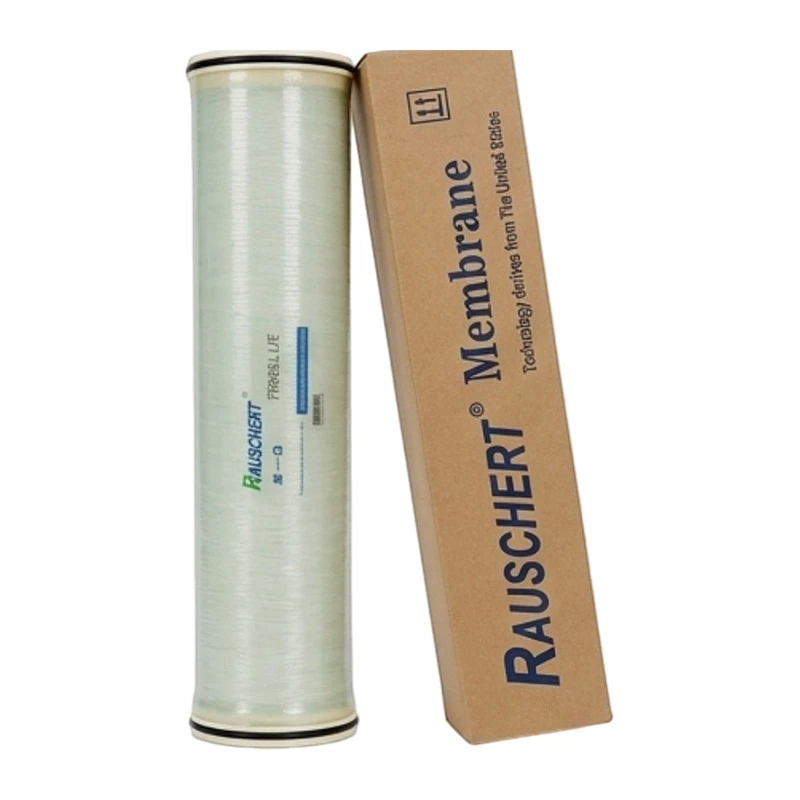

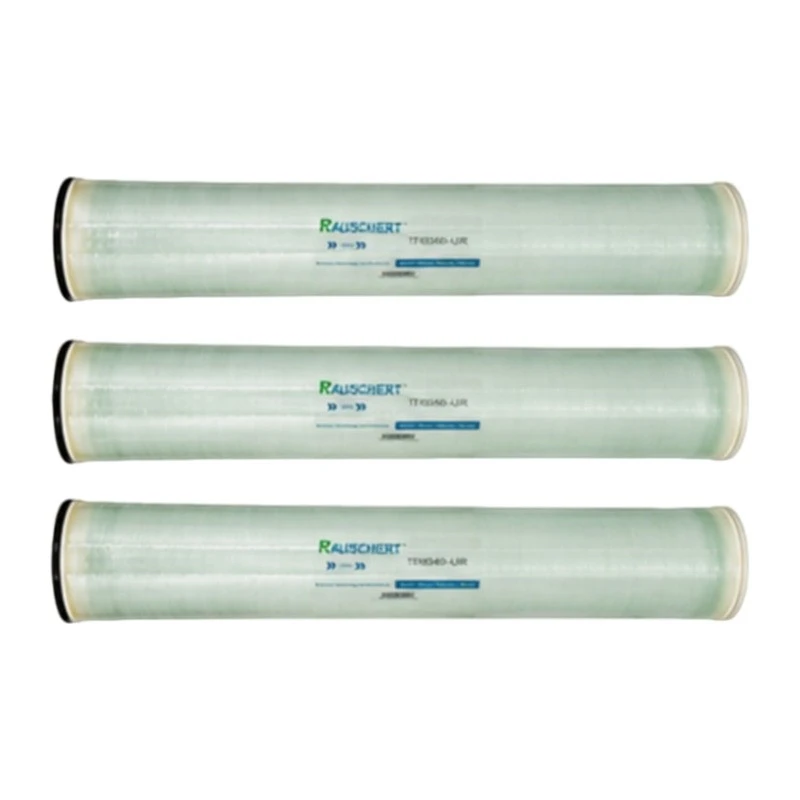
Fujian Huamo Technology Co., Ltd. is one of the most reliable manufacturers and suppliers of urea solution purification system membrane in China. If you're going to wholesale bulk urea solution purification system membrane made in China, welcome to get catalog and price list from our factory. All custom made products are with high quality and competitive price. Also, OEM service is available.
Product Details
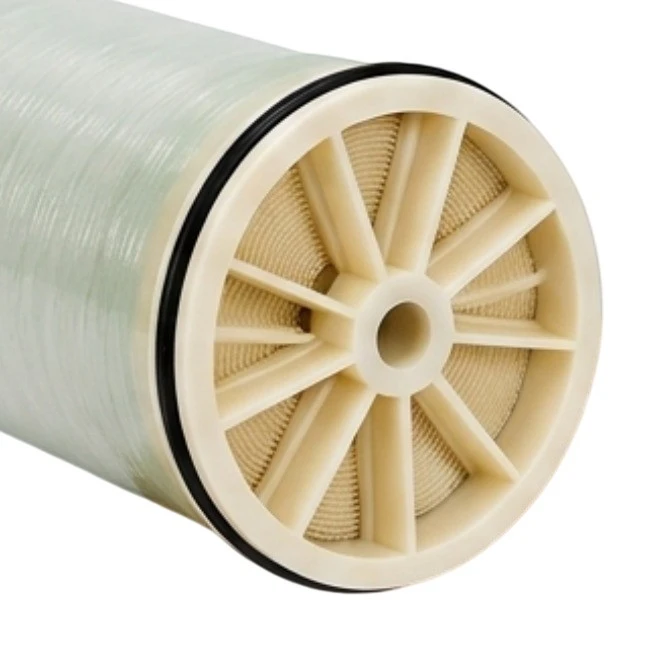
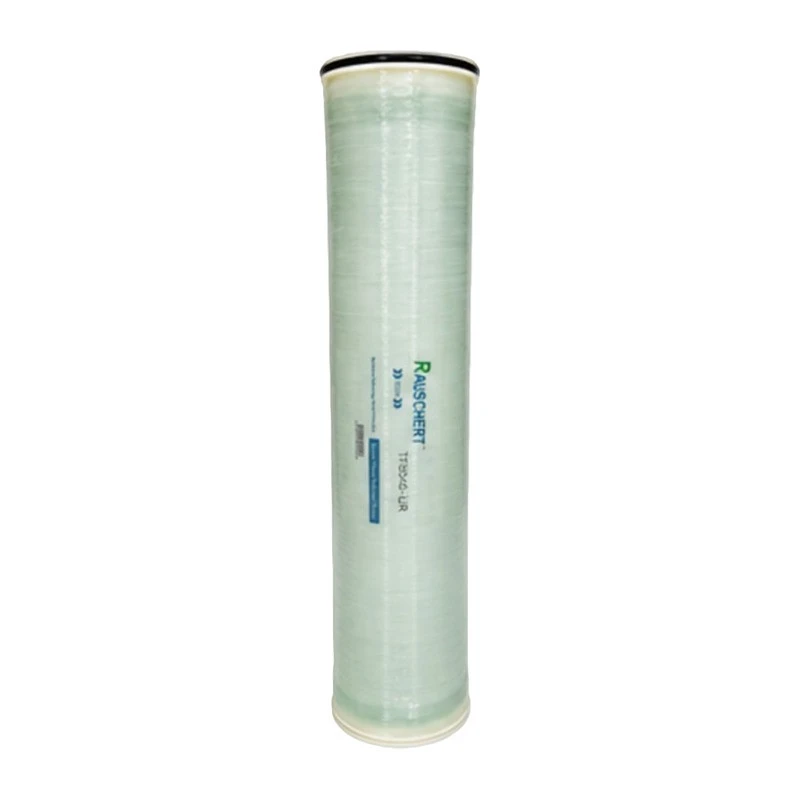
Urea solution purification system membrane is a high-flux separation membrane element developed for automotive urea purification systems, AdBlue production lines, and DEF manufacturing applications. The membrane adopts a 34 mil wide feed spacer structure to reduce pressure drop and improve flow distribution inside the element, helping maintain stable operation under continuous industrial running conditions. Compared with conventional RO elements used in standard water treatment systems, the TF8040-UR membrane is more suitable for urea solution environments with higher fouling potential and large-volume production requirements.
The TF8040-UR urea purification membrane provides a permeate flow rate of 11,500 GPD (44 m³/day) with an active membrane area of 400 ft² (37 m²). The membrane supports operating pressures up to 41 bar (600 psi), continuous operating pH from 2–11, and chemical cleaning pH from 1–13. Its anti-fouling flow path design helps reduce feed channel blockage and improves cleaning efficiency in automotive urea filtration systems, diesel exhaust fluid purification systems, and industrial urea separation processes.
Product Specifications
Parameter | Value |
Model | TF8040-UR |
Membrane Type | Urea Solution Purification Membrane |
Application | DEF / AdBlue / AUS32 Production Systems |
Active Membrane Area | 400 ft² (37 m²) |
Stabilized Salt Rejection | 40–60% (NaCl) |
Permeate Flow Rate | 11,500 GPD (44 m³/d) |
Feed Spacer Thickness | 34 mil |
Maximum Operating Pressure | 41 bar (600 psi) |
Maximum Operating Temperature | 45°C (113°F) |
Maximum Pressure Drop per Element | 1.0 bar (15 psi) |
Continuous Operating pH Range | 2–11 |
Chemical Cleaning pH Range | 1–13 |
Maximum Feed SDI15 | 5.0 |
Chlorine Tolerance Limit | <0.1 ppm |
Feed Water Pressure (Test Condition) | 0.48 MPa (70 psi) |
Feed Water Temperature (Test Condition) | 25°C (77°F) |
Feed Water Concentration (Test Condition) | 2,000 ppm NaCl |
Feed Water pH (Test Condition) | 7 |
Permeate Recovery (Test Condition) | 15% |
Permeate Flow Tolerance | ±15% |
Effective Membrane Area Tolerance | ±4% |
Salt Rejection Stabilization Time | 24–48 Hours Continuous Operation |
How This Membrane Design Reduces Long-Term Maintenance Load in Urea Purification Systems
The urea membrane for DEF, AdBlue and AUS32 production systems is configured with a 34 mil feed spacer and a low pressure-drop flow channel design. In continuous urea processing, this structure helps reduce localized stagnation inside the membrane element, where fouling and urea crystallization typically start. More uniform flow distribution across the urea solution purification system membrane surface slows down differential pressure build-up and reduces the frequency of system instability caused by channel blockage or uneven loading between elements.
For long-term operation, this design directly affects maintenance workload in industrial systems. The wider feed channel improves CIP cleaning efficiency by allowing better penetration of cleaning solutions into the membrane flow path, which helps remove deposits more completely in a single cycle. As a result, operators can expect longer intervals between chemical cleaning, lower chemical consumption, reduced unplanned shutdowns, and more stable pressure trends across multi-element vessels, which supports more predictable maintenance scheduling in DEF and AdBlue production systems.

Storage of Specialized Membranes for Automotive Urea Purification
If the TF8040-UR urea purification membrane is not installed immediately after delivery, proper storage conditions are required to maintain membrane performance and prevent irreversible damage.
1. Storage Environment
The membrane elements should be stored in a cool, dry, and shaded environment. Recommended storage temperature is 5–35°C (41–95°F). Avoid direct sunlight, heat sources, and freezing conditions. Freezing may cause structural damage to the membrane layers.
2. Sealed Condition Maintenance
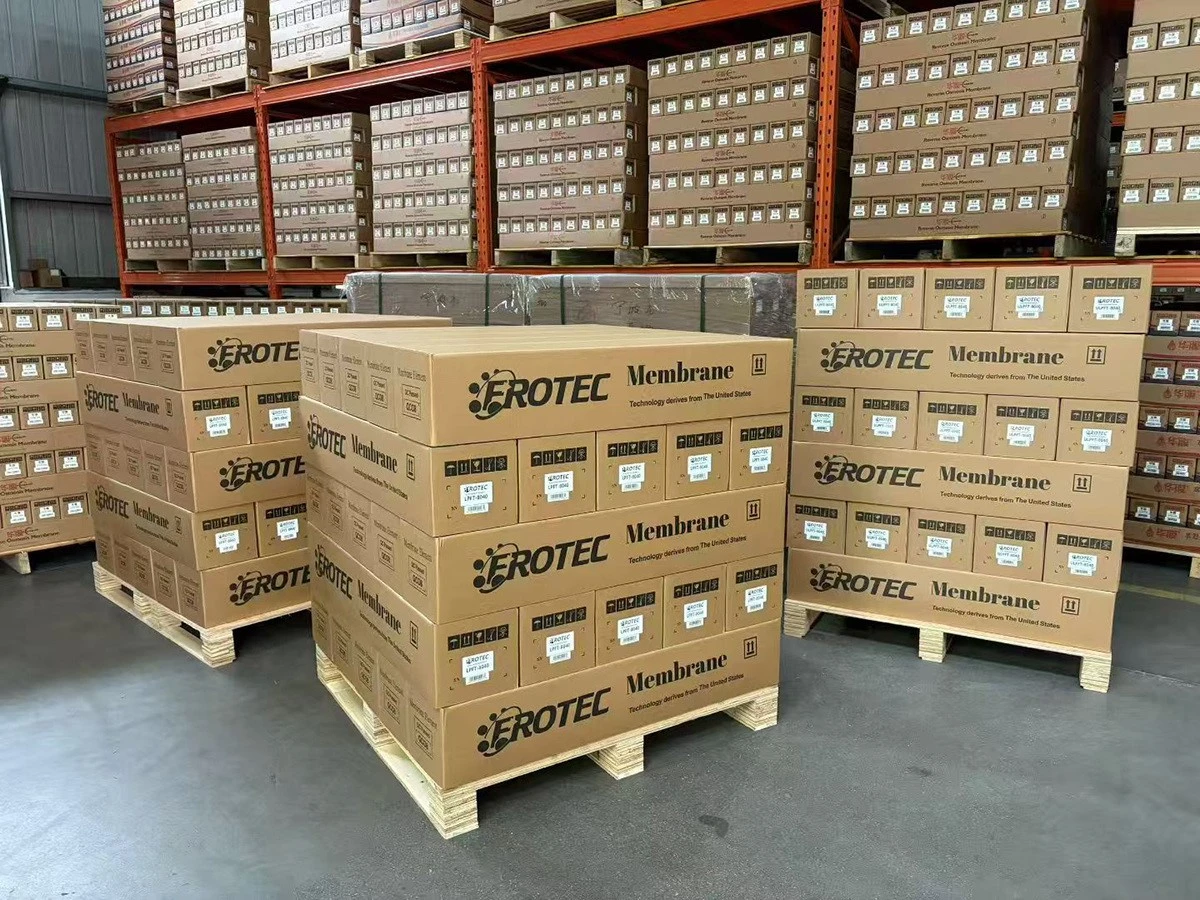
Our urea solution purification system membrane elements are shipped in a sealed preservative solution. The original packaging should remain intact until installation. Do not open or drain the preservation solution during storage.
3. Humidity and Contamination Control
The storage area should be free from dust, organic vapors, and chemical contaminants. Exposure to airborne pollutants may affect membrane surface condition and initial performance stabilization.
4. Long-Term Storage Guidance
If storage exceeds the original preservation period, periodic inspection of packaging integrity is recommended. If sealing is compromised or preservation solution leakage occurs, the membrane should be re-preserved using an approved storage solution before use.
5. Pre-Installation Handling
Before system installation, membranes should be flushed according to standard commissioning procedures to remove preservation solution. Do not operate under high pressure before proper flushing and system conditioning.
6. Important Notes
Do not expose the membrane to direct chlorine or oxidizing agents during storage
Do not allow the membrane to dry out
Do not stack heavy loads on membrane boxes to avoid mechanical deformation
Proper storage ensures the membrane maintains stable flux performance and predictable stabilization time once the system is started.
FAQ
Q: What membrane is used in DEF and AdBlue production systems?
A: DEF and AdBlue production systems commonly use specialized urea purification membranes configured for controlled salt passage, stable permeate quality, and fouling resistance under urea processing conditions.
Q: Why is low pressure drop important in urea purification systems?
A: Higher pressure drop may increase energy consumption, accelerate fouling formation, and reduce membrane cleaning efficiency. Lower pressure drop helps maintain stable hydraulic conditions during continuous operation.
Q: What causes fouling in automotive urea membrane systems?
A: Common fouling sources include urea crystallization, suspended solids, organic contamination, and insufficient pretreatment performance.
Q: What pretreatment is recommended for urea purification membranes?
A: Pretreatment typically includes multimedia filtration, activated carbon filtration, softening or antiscalant dosing, and precision filtration to maintain acceptable SDI levels before the membrane system.