



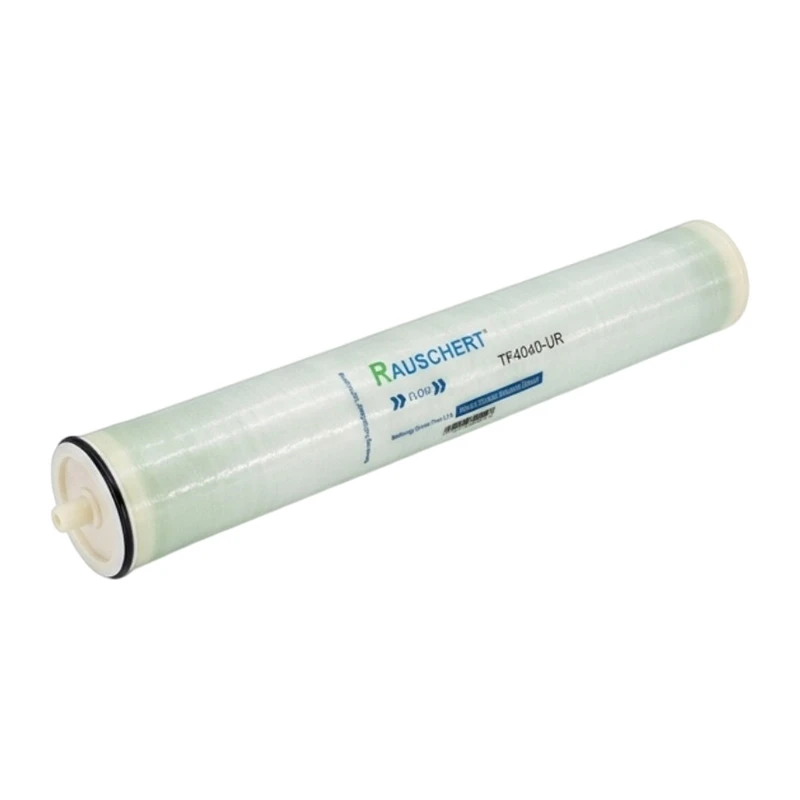
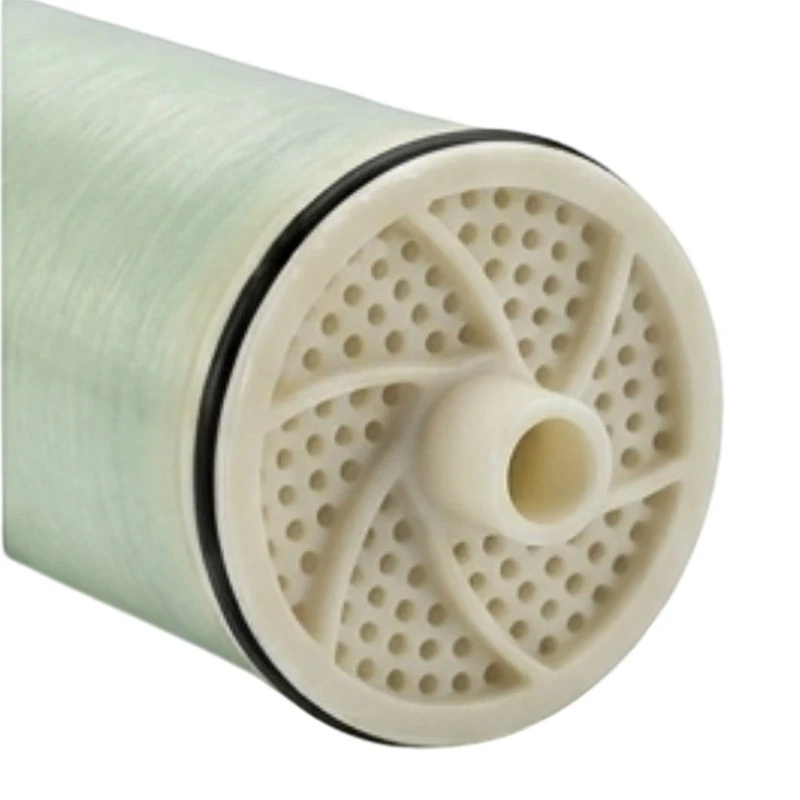

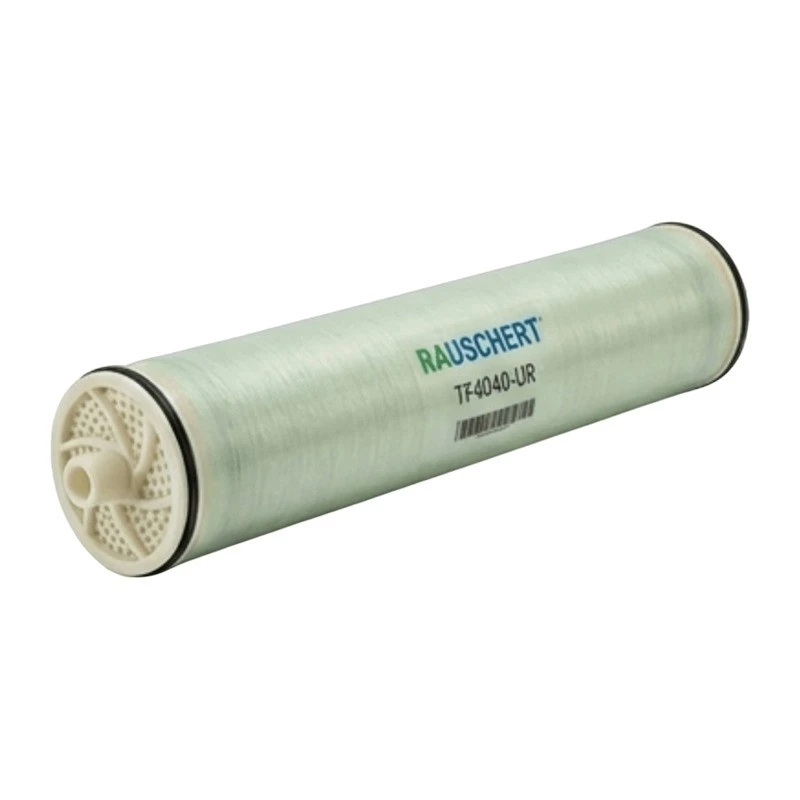
Fujian Huamo Technology Co., Ltd. is one of the most reliable manufacturers and suppliers of high rejection nanofiltration membrane for urea in China. If you're going to wholesale bulk high rejection nanofiltration membrane for urea made in China, welcome to get catalog and price list from our factory. All custom made products are with high quality and competitive price. Also, OEM service is available.
Product Details
High rejection nanofiltration membrane for urea is a spiral-wound membrane element developed for automotive urea purification systems, including DEF (AdBlue®) production and SCR-related urea treatment applications. It is designed to provide stable separation performance under varying feed conditions commonly found in industrial urea processing environments.
Industrial urea purification systems may experience changes in feed quality and operating load during continuous production. TF4040-UR adopts a 34 mil feed spacer design to improve flow distribution and reduce pressure loss across the membrane element. Its standard 4040 spiral-wound configuration supports reliable operation, easier system integration, and compatibility with a wide range of automotive urea processing equipment.
Product Specifications
Parameter | Value |
Model | TF4040-UR |
Membrane Type | Spiral-wound RO/NF element |
Active Membrane Area | 82 ft² (7.6 m²) |
Permeate Flow Rate | 2250 GPD (8.7 m³/d) |
Stabilized Salt Rejection | 40–60% (NaCl) |
Test Conditions | 0.48 MPa (70 psi), 25°C, 2000 ppm NaCl, pH 7, Recovery 15% |
Maximum Operating Pressure | 41 bar (600 psi) |
Maximum Operating Temperature | 45°C (113°F) |
pH Range (Continuous Operation) | 2–11 |
pH Range (CIP Cleaning) | 1–13 |
Maximum Feed SDI (15 min) | 5.0 |
Free Chlorine Tolerance | <0.1 ppm |
Maximum Pressure Drop (Single Element) | 1.0 bar (15 psi) |
Feed Spacer | 34 mil |
Permeate Flow Tolerance | ±15% |
Membrane Area Tolerance | ±4% |
Stabilization Time | 24–48 hours (depending on feedwater conditions) |
Membrane Area Control and Element Winding Precision
During the manufacturing process of our urea purification membrane elements, we employ a combination of raw material pre-calibration, controlled layer-by-layer stacking, and in-process dimensional verification to precisely control the effective membrane area and winding accuracy. Our high rejection nanofiltration membrane for urea nominal effective membrane area is set at 82 square feet (7.6 square meters); every product batch is assembled under controlled cutting and alignment protocols to ensure that the allowable tolerance remains within a range of ±4%. Prior to the winding operation, the membrane sheets undergo a pre-inspection to verify their dimensional consistency and thickness uniformity, thereby ensuring that minute geometric deviations in the sheets do not accumulate during the spiral-wound assembly process.
During the winding process, both the feed spacer (34 mil) and the permeate carrier layer are positioned under controlled tension to ensure that the flow channel geometry remains consistent throughout the entire length of the element. The winding tension is precisely calibrated to prevent localized over-compression or slackness-conditions that would directly compromise fluid distribution and the available membrane surface area. Each membrane sheet is aligned against a fixed reference edge to prevent lateral drift, thereby ensuring that the membrane envelope remains concentric with the central permeate tube at all times. This control measure not only enhances the utilization efficiency of the effective surface area but also minimizes inactive zones at the edges, thereby preventing any reduction in the theoretically calculated membrane area.
Upon completion of the winding and adhesive curing processes, we verify the consistency of each membrane element's outer diameter, the stability of its length, and the uniformity of the membrane envelope. This ensures that, under actual operating conditions, the theoretically calculated membrane area accurately corresponds to the actual effective area capable of fluid permeation. Any deviations detected are immediately corrected during the production process, thereby effectively preventing performance drift-specifically regarding permeate flow rate and salt rejection-during the equipment commissioning and operation phases.


FAQ
Q1: What is a urea purification membrane element used for?
A: Urea purification membrane elements are specialized separation components primarily utilized in the chemical, automotive, and agricultural sectors for the concentration and purification of urea solutions. These high rejection nanofiltration membrane for urea, designed specifically for urea purification, are capable of effectively removing the following substances: biuret (a harmful by-product of the urea manufacturing process); insoluble suspended solids and fine particulates; trace amounts of metal ions (such as calcium, magnesium, and iron) and organic impurities; as well as triuret and aldehyde polymers.
Q2: What is the difference between RO and NF in urea purification?
A: RO (Reverse Osmosis) uses a very dense membrane that removes almost all dissolved salts and impurities, including urea. It delivers very high purity but also has lower flux and higher energy consumption.
NF (Nanofiltration) has a slightly looser membrane structure. It mainly removes multivalent ions and partial organics, while allowing some small monovalent ions to pass. It offers higher flux and lower operating pressure, but the purity is lower than RO.
Q3: Can Urea concentration membrane element handle high-fouling feed water?
A: Yes, exceptionally well. The inclusion of the 34 mil wide feed spacer is specifically engineered to handle high-fouling or high-viscosity fluids like industrial urea solutions.
Q4: When is it necessary to clean the urea purification membrane? A: Cleaning can be performed using a standard CIP (Clean-in-Place) system when the normalized permeate flow rate drops by 10%, the temperature-corrected feed pressure increases by 15%, or the pressure drop increases by 15%.
Q5: How to clean a urea purification membrane?
A: Standard Cleaning Protocol:
1. Alkaline Cleaning: Typically involves the use of a 0.1% NaOH (sodium hydroxide) solution, supplemented by a formulated membrane cleaning agent or surfactant. Target pH: 11 to 12.
2. Acidic Cleaning: Utilizes 0.2% HCl (hydrochloric acid) or 2.0% citric acid. Target pH: 2 to 3.
Using warm cleaning solutions (30°C to 40°C) can significantly enhance cleaning efficiency, provided that the solution temperature does not exceed the maximum temperature tolerance limit of the membrane elements. Circulate the cleaning solution through the system for 30 to 60 minutes; in cases of severe fouling, follow with a 30-minute soaking period. Finally, prior to resuming production, perform a low-pressure rinse using high-quality RO (reverse osmosis) permeate or DI (deionized) water.