



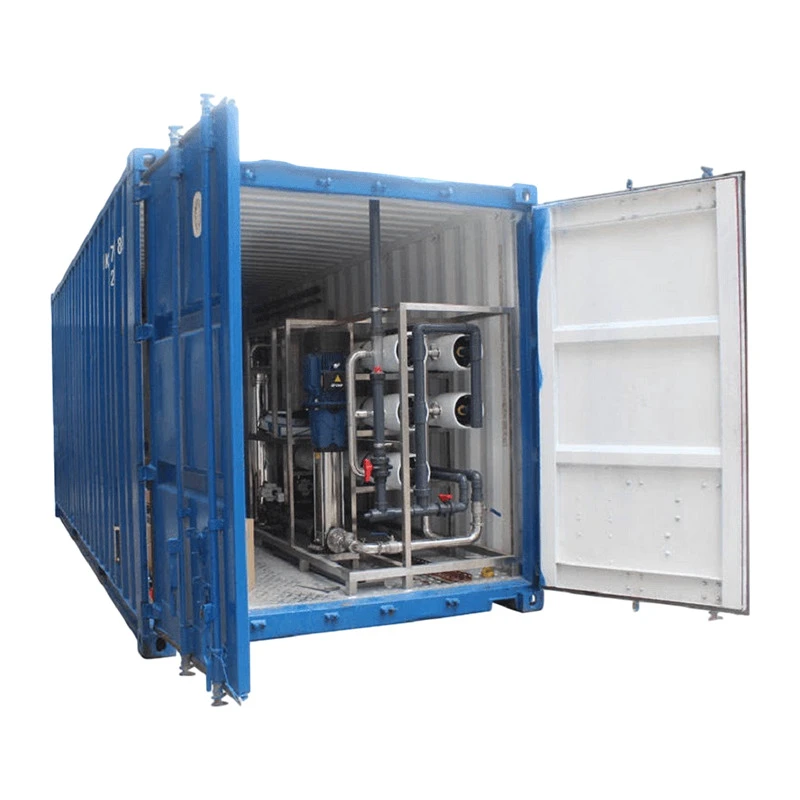
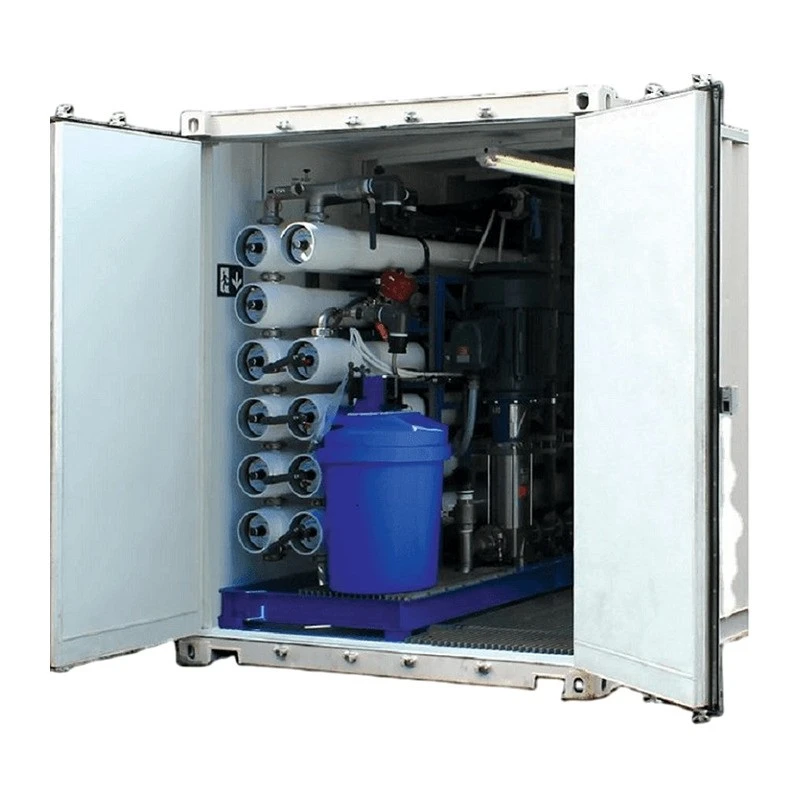
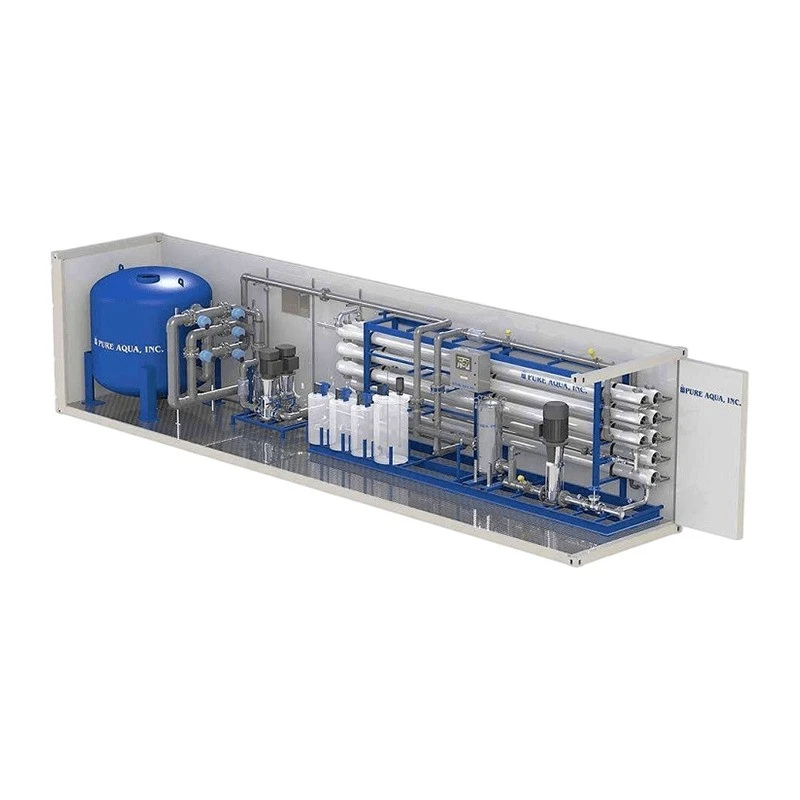
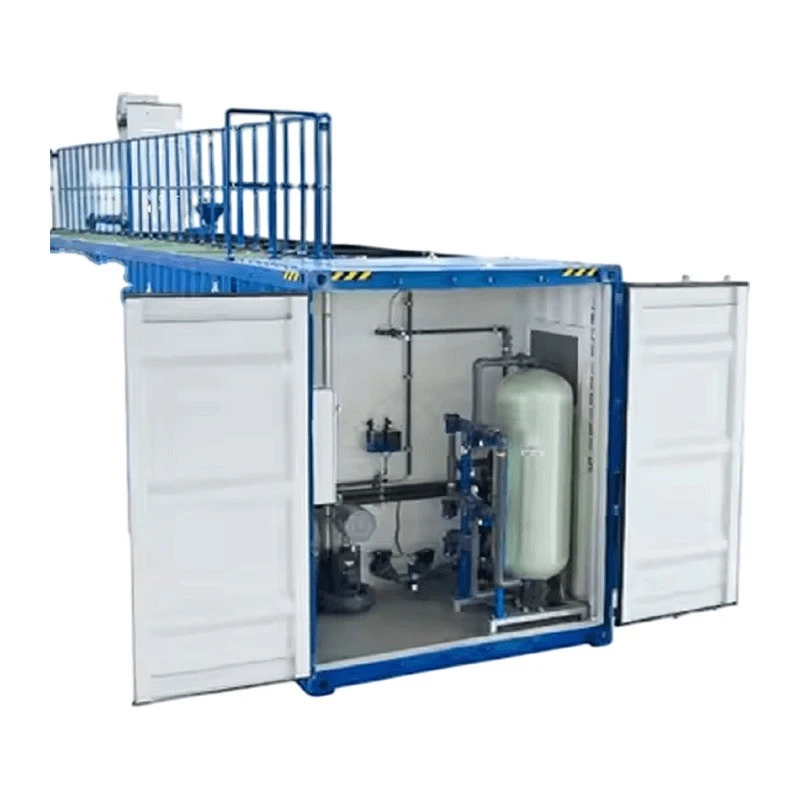

Fujian Huamo Technology Co., Ltd. is one of the most reliable manufacturers and suppliers of 20000 lph containerized ro system in China. If you're going to wholesale bulk 20000 lph containerized ro system made in China, welcome to get catalog and price list from our factory. All custom made products are with high quality and competitive price. Also, OEM service is available.
Product Details


Product Video Description
Discover the internal layout and integrated treatment process of a 20000 LPH containerized reverse osmosis water system.
Technical Parameters
Capacity | 20000 LPH |
RO Type | Brackish Water RO System |
RO Membrane | Industrial BW RO Membrane |
Frame Material | Stainless Steel 304 |
Pretreatment Tank | FRP Tank |
Control System | PLC Automatic Control |
Voltage | 380V / 50Hz |
Pipe Material | PVC / SS Optional |
Desalination Rate | 97%-99% |
Certification | CE |
Storage Guide for 20000 LPH Containerized RO System
Containerized reverse osmosis systems are frequently used in overseas engineering projects, temporary industrial installations, mining operations, island water supply programs, and remote infrastructure developments where transportation flexibility and rapid deployment are essential. Because these systems are often transported over long distances or stored before installation, proper preservation procedures are necessary to protect both mechanical and membrane components from environmental damage during idle periods.
Before long-term storage begins, the entire RO system should undergo a complete flushing process using clean low-mineral water in order to remove residual concentrate, suspended solids, and chemical deposits from pipelines and membrane housings. If untreated water remains trapped inside the system, evaporation and biological growth may accelerate scaling formation and damage sensitive membrane surfaces. Following flushing, membrane elements are generally preserved using manufacturer-approved chemical preservation solutions designed to inhibit microbial activity and prevent dehydration inside the membrane structure.


FAQ
Q1: Why does condensation appear inside the container during storage?
Large temperature differences between daytime and nighttime may cause moisture accumulation inside enclosed container environments.
Q2: Can long-distance sea transportation damage membrane elements?
Improper fixation or preservation may expose membranes to vibration, dehydration, or salt-air contamination during overseas shipment.
Q3: What should be checked before restarting a stored containerized RO system?
Operators should inspect membrane preservation solution, electrical insulation, valve flexibility, and pipeline sealing before pressurization begins.