



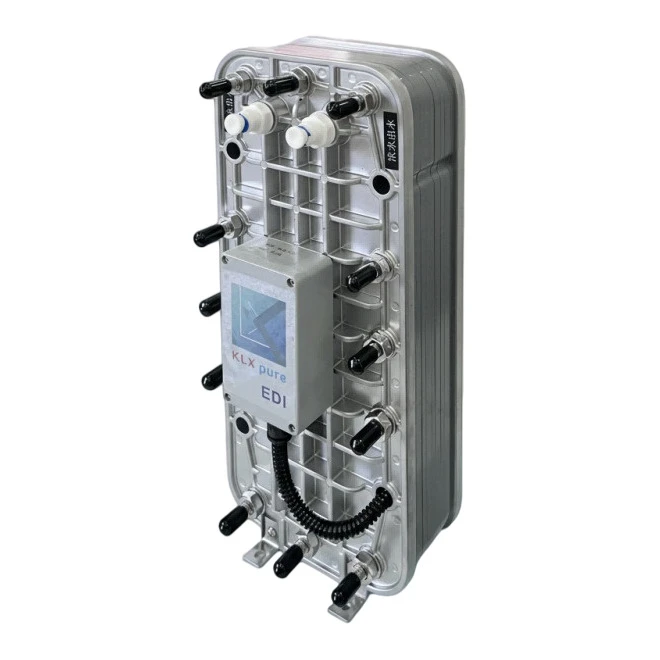
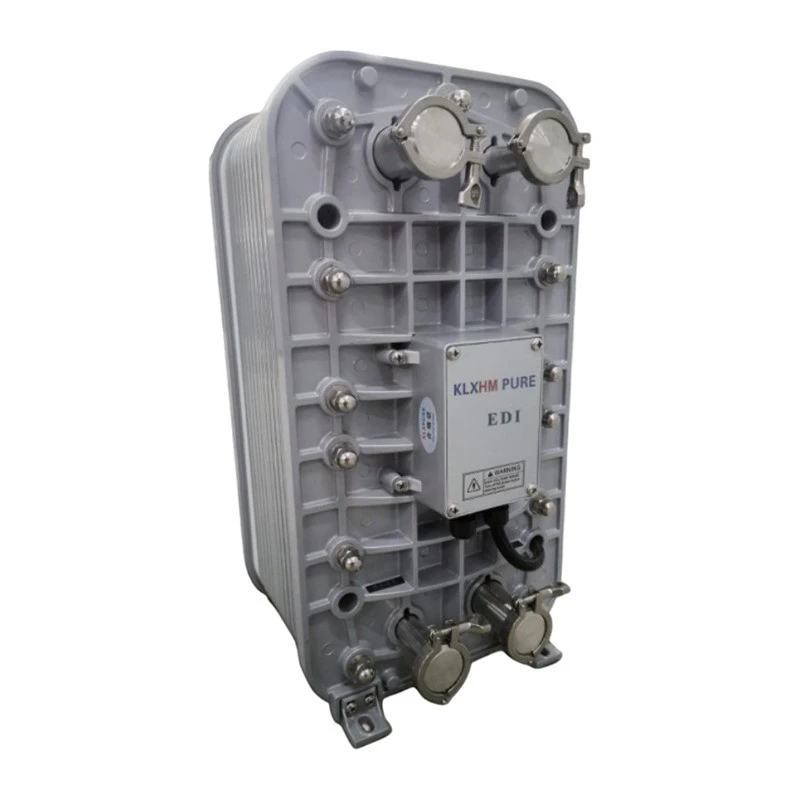


Fujian Huamo Technology Co., Ltd. is one of the most reliable manufacturers and suppliers of ro edi water treatment in China. If you're going to wholesale bulk ro edi water treatment made in China, welcome to get catalog and price list from our factory. All custom made products are with high quality and competitive price. Also, OEM service is available.
Product Details
RO EDI Water Treatment from CLAYSON uses the KXGW series, which operates without any chemicals. No acid, no caustic, no salt injection, and no neutralization tanks. The only consumable is electricity. For a typical pharmaceutical or biotech facility, this eliminates the cost of purchasing and storing hazardous chemicals, removes the need for neutralization systems before drain discharge, and reduces operator safety risks. The concentrate stream (5‑10% of feed flow) meets most environmental discharge limits without additional treatment. Operating cost stays below 0.10 kWh per m³ of product water – just the electricity for the pump and the DC power supply. The module regenerates its own resin continuously using H⁺ and OH⁻ ions generated from water splitting, so you never stop production for chemical regeneration.
Factory Quality Assurance
Before any KXGW module leaves our door, every unit goes through a 15‑point inspection. I personally check high‑temperature membrane batches in 85°C water, verify the stacking order of anion/cation membranes and spacers, and test each electrode plate for burrs that could puncture a membrane. We pressure‑hold every module at 0.6 MPa for ≥10 hours, then run 85°C hot water through the concentrate circuit for 30 minutes while checking for leaks. We measure the initial pressure drop at rated flow and record the current‑voltage curve – for example, a KXGW‑50 should show 2 A at 15‑20 V with RO feed at 3‑5 μS/cm. Each module gets a signed test report with the actual resistivity (we saw 17.68 MΩ·cm on a KXGW‑50) and the torque‑checked bolts. If it does not pass every step, it does not ship. That is how we deliver a RO EDI water treatment module that handles 85°C hot water sanitization out of the box.

Video Description
Watch our factory assembly and hot water sanitization test for the KXGW series EDI module.
Product Specifications
Parameter | KXGW-50 | KXGW-100 | KXGW-200 | KXGW-300 | KXGW-400 | KXGW-500 |
Working Current (DC, A) | 1-6 | 1-6 | 1-6 | 1-6 | 1-6 | 1-6 |
Working Voltage | 0-400 | 0-400 | 0-400 | 0-400 | 0-400 | 0-400 |
Water Production Flow Range (m³/h) | 0.3-0.7 | 0.7-1.5 | 1.5-2.5 | 2.5-3.5 | 3-4.5 | 4-5.5 |
Standard Water Production Flow (m³/h) | 0.5 | 1 | 2 | 3 | 4 | 5 |
Recovery Rate (%) | 90-95 | 90-95 | 90-95 | 90-95 | 90-95 | 90-95 |
Product Water Resistivity (MΩ·cm) | 15-18.25 | 15-18.25 | 15-18.25 | 15-18.25 | 15-18.25 | 15-18.25 |
Disinfection Temperature (≤0.2MPa) | 85±5℃ | 85±5℃ | 85±5℃ | 85±5℃ | 85±5℃ | 85±5℃ |
Disinfection Cycles | >150 times | >150 times | >150 times | >150 times | >150 times | >150 times |


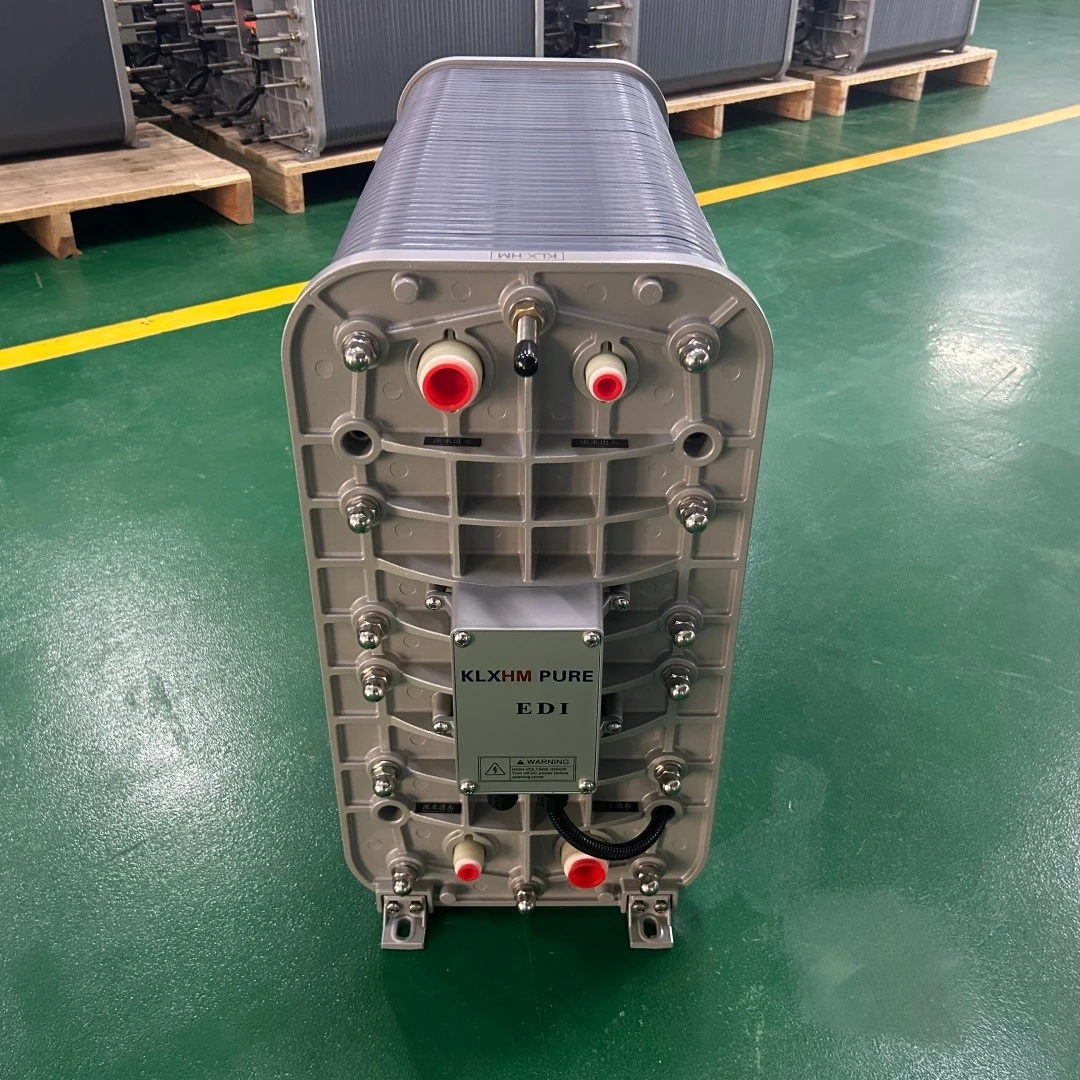
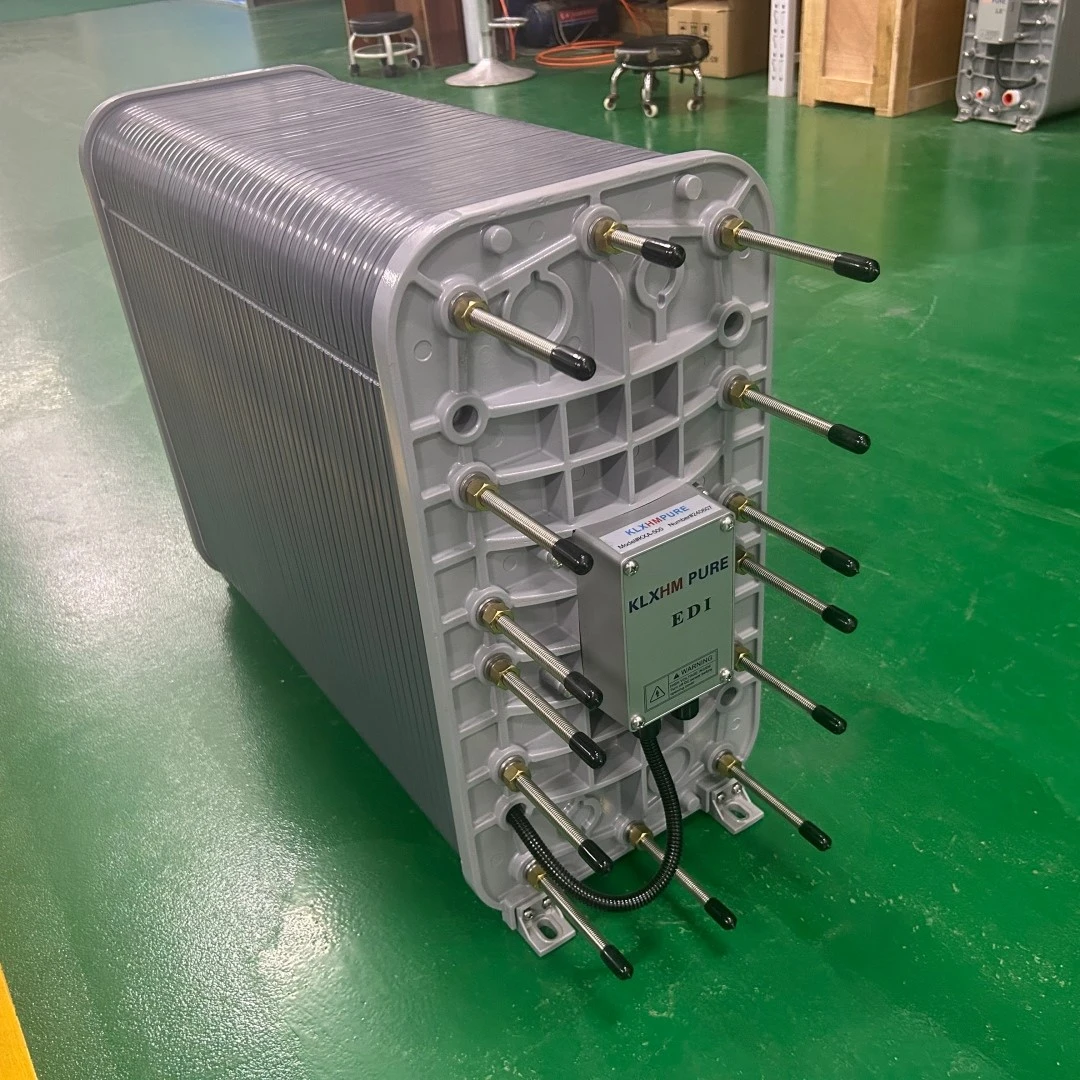
 Dimensions and mounting hole spacing are listed in the technical drawing. All models share 312 mm width and 605 mm height; length varies from 324 mm to 922 mm.

Certifications
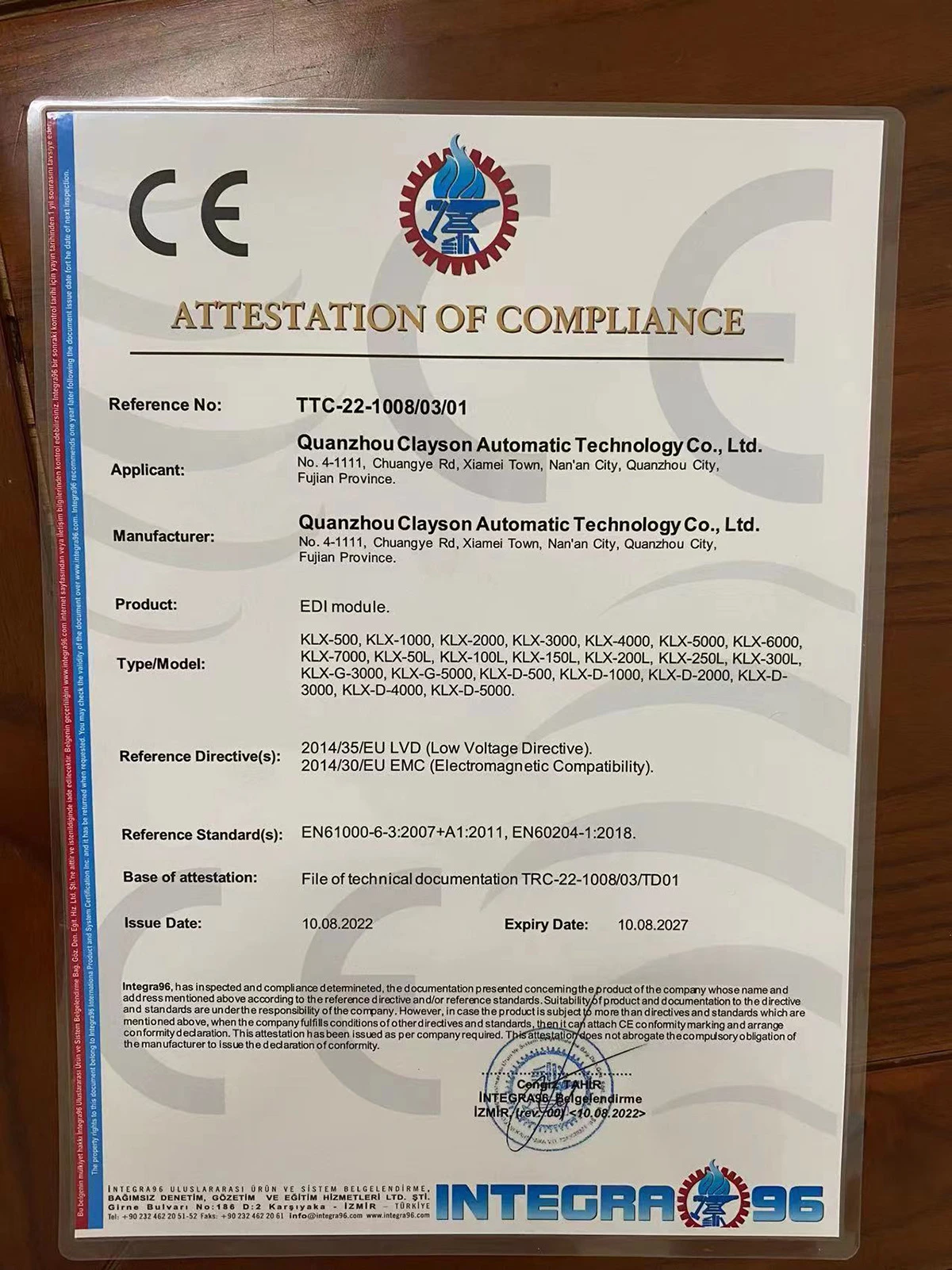
CE compliant
RoHS compliant
ISO 9001 and ISO 14001 certified factory
FDA compliance available for pharmaceutical modules upon request
FAQ
1. Can I run the module at 85°C for several hours every day?
Yes. The module is designed for repeated thermal disinfection cycles. Each cycle can last up to 60 minutes. The seals, membranes, and housing materials are selected for 85°C exposure. After each sanitization, the system should return to normal operating temperature (below 35°C) before resuming standard production.
2. What happens if the feed water conductivity is above 10 μS/cm?
The module can accept feed up to 25 μS/cm, but the product water resistivity will drop below 15 MΩ·cm. For consistent 15‑18.25 MΩ·cm output, we recommend RO permeate with conductivity ≤10 μS/cm. Higher conductivity also increases the risk of scaling on the concentrate side.
3. How do I know when the module needs chemical cleaning?
Two signs: (1) The pressure drop between feed inlet and concentrate outlet increases by more than 30% from the initial value. (2) Product resistivity drops below 15 MΩ·cm while feed water quality and current remain unchanged. If scaling is the cause, an acid wash will restore performance.