



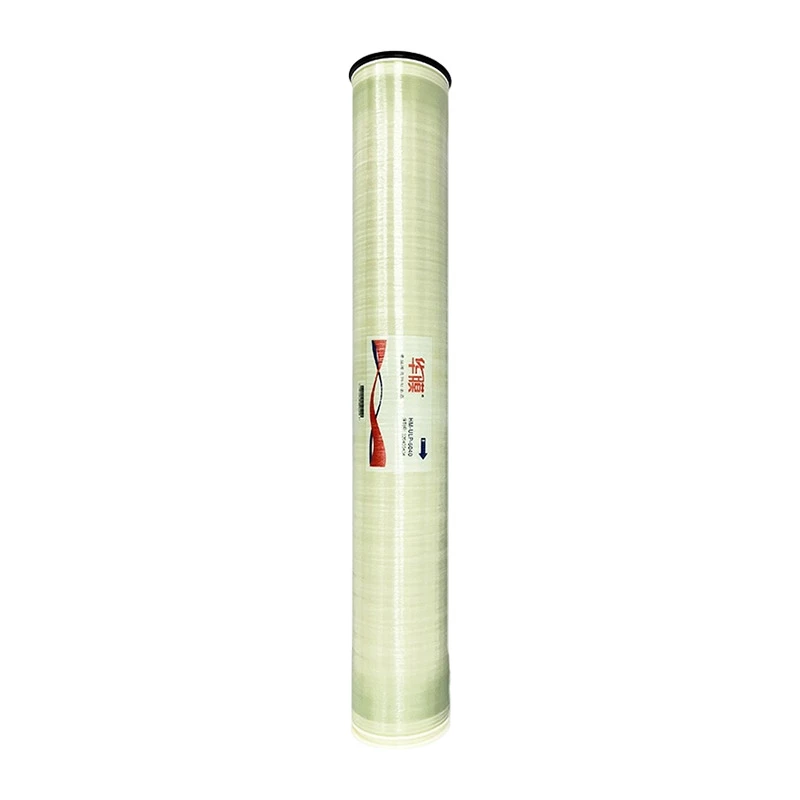

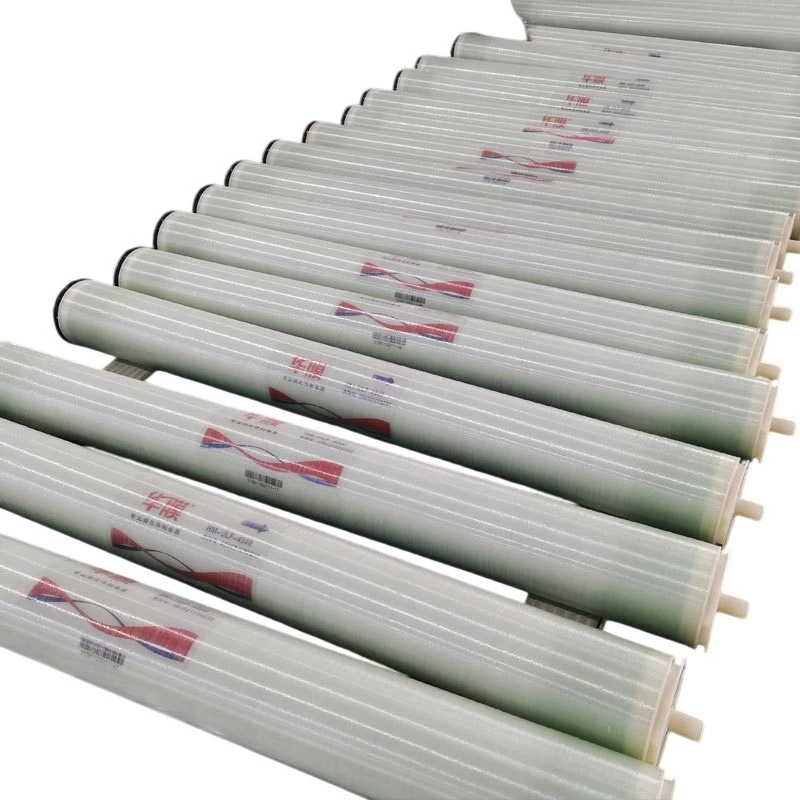

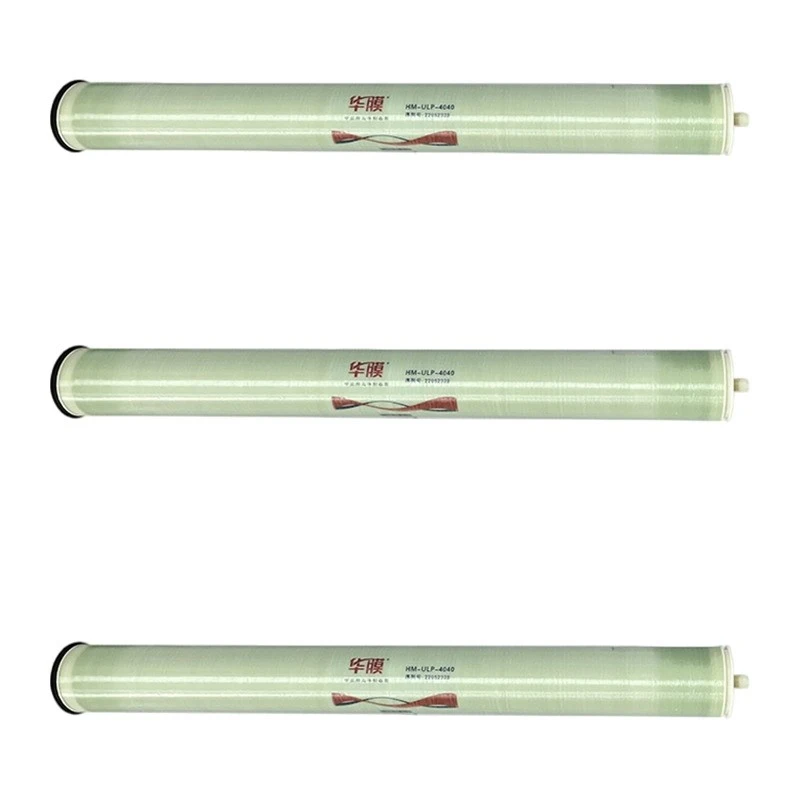
Fujian Huamo Technology Co., Ltd. is one of the most reliable manufacturers and suppliers of bw4040 high salt rejection membrane in China. If you're going to wholesale bulk bw4040 high salt rejection membrane made in China, welcome to get catalog and price list from our factory. All custom made products are with high quality and competitive price. Also, OEM service is available.
Product Details
The BW4040 high salt rejection membrane is a 4 inch reverse osmosis element configured for brackish water systems that require stricter control of dissolved ions in the permeate stream. It is typically applied in operating conditions where product water quality needs to remain consistent alongside stable system throughput.
We supply the high salt rejection membrane for use in equipment assembly, system upgrades, and routine replacement. Based on standard test parameters, it delivers a stabilized salt rejection of 99.6%, a minimum rejection of 99.4%, and a permeate flow of 2050 gpd (7.8 m³/d), aligning with applications that specify lower conductivity in the treated water.
High Salt Rejection Performance
The defining characteristic of the BW4040 high salt rejection membrane is its ability to maintain a high level of ion removal during operation. A stabilized rejection rate of 99.6% means that a large proportion of dissolved salts present in the feed water is prevented from passing into the permeate stream.
In systems where feed water contains approximately 2,000 ppm NaCl, this level of rejection contributes to a measurable reduction in permeate conductivity. This is particularly relevant in processes where downstream equipment or product requirements depend on controlled water quality.
Video Description
This video shows a fully automated RO membrane rolling production line, covering the key stages of reverse osmosis membrane manufacturing. It includes membrane sheet preparation, automatic rolling, bonding, and assembly processes carried out by precision equipment. The footage provides a clear view of how RO membrane elements are produced under controlled conditions, highlighting the efficiency and consistency of automated production.
Product Specifications
Model | Reverse Osmosis Membrane BW4040 |
Permeate Flow Rate | 2050 gpd (7.8 m³/d) |
Feed Water Pressure (Test Condition) | 1.55 MPa (225 psi) |
Feed Water Temperature (Test Condition) | 25°C (77°F) |
Feed Water Concentration (Test Condition) | 2,000 ppm NaCl |
Weight | 3.5 kg |
Active Membrane Area ft2(m2) | 78 ft² (7.2 m²) |
Stabilized Salt Rejection % | 99.6 |
Minimum Salt Rejection % | 99.4 |
Maximum Operating Pressure | 41 bar (600 psi) |
Maximum Operating Temperature | 45°C (113°F) |
Application Areas Requiring Higher Rejection
The high salt rejection membrane element is commonly used in systems where permeate quality has a direct impact on downstream processes:
- Electronics and precision manufacturing water systems
- Boiler feed water preparation
- Pharmaceutical and laboratory water systems
- Food and beverage processing water
- Systems requiring reduced TDS before secondary treatment
Certifications and Quality Assurance
Our RO membrane manufacturing process is aligned with industry requirements, and relevant certifications are available to support product qualification in different markets. Each BW4040 high salt rejection membrane undergoes inspection before shipment to confirm compliance with specified performance parameters.


FAQ
1. When to choose a high rejection membrane?
Use BW4040 when:
Low-TDS or strict conductivity is required.
Downstream polishing is limited or absent.
Processes are sensitive to ionic contamination (e.g., boiler feed, lab, electronics).
Stable water quality is needed despite feed variability.
2. How do system conditions impact selection?
Consider: feed water quality, permeate TDS, operating pressure/temperature, recovery, system throughput, and post-treatment.
BW4040 is built for consistent water quality and industrial reliability, enabling optimized RO system design.
3. How does automated production improve quality?
Fully automated rolling, bonding, and assembly minimize variability.
Strict quality checks ensure uniform performance across batches, supporting OEM, replacement, and global supply.