



If you’ve ever dug into industrial water treatment, chances are you’ve heard the buzz about low energy RO membranes paired with membrane bioreactors (MBRs) — but do you actually know how the two work together to slash energy use while still delivering top-tier water quality? As the lead at a membrane tech supply company, I get asked this all the time: “How is this different from the RO I was using last year?” Let’s break it down in plain talk, no jargon overload, and make sense of why this combo is a game-changer for everything from municipal wastewater recycling to industrial process water.
First, let’s recap the basics so we’re all on the same page. A membrane bioreactor is basically a two-part system: first, biological treatment (where microbes eat away organic gunk, nitrogen, and other nastiness from wastewater, like tiny living garbage disposals), then solid-liquid separation to catch those microbes and leftover solids. The effluent from an MBR is already way cleaner than regular secondary-treated wastewater — it’s lower in suspended solids, organics, and even some salts, but it’s not clean enough to reuse for things like irrigation, manufacturing processes, or even potable water in many cases. That’s where RO comes in.
Traditional RO systems force water through a tight semipermeable membrane at really high pressure, usually 100–150 psi, because the feed water (often wastewater or brackish water) has enough salt that the natural osmotic pressure pushing back is high. The problem? High pressure means bigger pumps, more electricity, higher operational costs, and more wear and tear on equipment. Low energy RO membranes change that equation by being way more permeable and selective than standard RO films, so you don’t need to crank up the pressure as much to push water through while still rejecting 99%+ of salts, organics, and contaminants. When you pair this with an MBR, the pre-treated feed water cuts down on the gunk that would otherwise foul an RO membrane, making the whole system even more efficient.
Let’s dive into the specific mechanics of how a low energy RO membrane actually works in this MBR setup, step by step. After the MBR’s biological process filters out most of the organic load and suspended solids, the MBR effluent goes through a quick pre-treatment step first — usually an ultrafiltration (UF) step or a cartridge filter to catch any remaining tiny particles that could scratch or clog the RO membrane’s surface. This is key because even small bits of leftover sludge can foul a standard RO membrane fast, but the low energy RO’s design helps it handle slightly more fouling potential without needing constant chemical cleaning.
Next, the feed water hits the RO skid, but here’s where the low energy difference kicks in. Standard RO membranes use a polyamide thin-film composite (TFC) film that’s dense, so water has to squeeze through tiny pores at high pressure. Low energy RO membranes, though, are engineered with a modified TFC layer that’s thinner, more porous (but still selective, so it doesn’t let salts slip through), and has a smoother surface to reduce friction. That smooth surface also cuts down on fouling — contaminants are less likely to stick, so you don’t have to shut down the system as often for cleanings, which saves even more energy and downtime.
Wait, and that pressure number I mentioned earlier? A low energy RO membrane in an MBR feed stream typically runs at 50–80 psi. That’s half to two-thirds lower than a standard RO system for the same water production. Why? Because the MBR effluent has lower osmotic pressure than raw brackish or seawater. The microbes already ate most of the dissolved organic matter that would contribute to osmotic pressure, so the driving force needed to push water through the membrane is way lower. That lower pressure means you can use smaller, less energy-intensive pumps — think in terms of kilowatt-hours per gallon: a standard RO system might use 2–3 kWh per 1,000 gallons, while a low energy RO paired with an MBR can drop that to 0.5–1.2 kWh per 1,000 gallons. That’s a massive difference for facilities running 24/7.
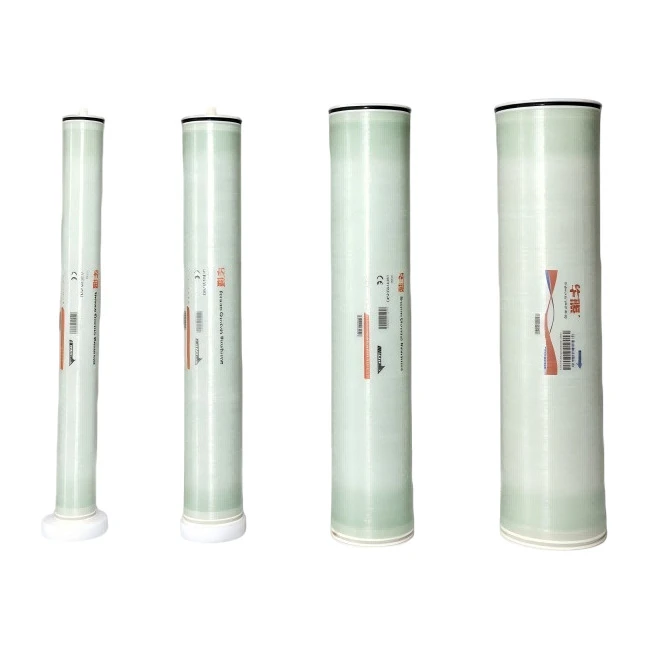
Let me also call out the different low energy RO element types that work best with MBR effluent, because not all low energy membranes are created equal. If you’re looking for a compact solution for smaller industrial or municipal setups, our Ultra Low Pressure RO Membrane Element is a go-to. It’s specifically designed for low-salinity feed water like MBR effluent, so it delivers high water flux without cranking up pressure too much. For larger-scale applications, the Energy Saving RO Membrane is built to handle higher flow rates while maintaining that low pressure, perfect for big wastewater recycling plants. And if you need a standard-sized element that fits existing RO skids without retrofitting, our 4040 Ultra Low Pressure RO Membrane or 8040 Economical RO Membrane are drop-in options. Even for low salinity water specifically, our RO Membrane for Low Salinity Water is optimized to reject salts and organics common in MBR effluent while keeping energy use minimal.

Now, let’s talk about the real-world impact of this pairing, because theory is great, but results matter. I’ve worked with a food and beverage plant that was using a standard RO system to recycle their process wastewater before switching to a low energy RO with their existing MBR. They were paying around $18,000 a month in electricity for the RO pumps alone — after the swap, that dropped to $7,000 a month. They also cut their chemical cleaning frequency from every 3 months to every 6 months, because the low energy membrane’s smooth surface didn’t get fouled as fast by the small amounts of residual food particles in their MBR effluent. Another client was a small municipal wastewater recycling plant aiming to reuse effluent for park irrigation; they installed our Energy Saving RO Membrane and didn’t even need to upgrade their pump system, just swapped out the old elements. Their water production stayed the same, their energy bill went down 55%, and they met all state water quality standards for reuse.
Of course, there are a few things to keep in mind to make this work, because no system is one-size-fits-all. First, MBR effluent quality can vary — if the MBR isn’t running optimally, there might be more suspended solids or dissolved organics that can still foul even the best low energy membrane. That’s why we always recommend a quick post-MBR filter (like a 5-micron cartridge or UF) before the RO to catch any stray solids. Second, while low energy membranes are more fouling-resistant, they still need regular maintenance — things like monitoring pressure drop across the RO skid, checking permeate quality, and scheduling periodic cleanings when needed. Third, these membranes are optimized for low salinity feed water, which MBR effluent usually is, so if you’re using them for higher salinity water (like seawater), you’d need a different type, but for MBR-based wastewater, they’re perfect.
Another common question I get: “Do low energy membranes sacrifice water quality for lower energy?” Short answer: no. Our low energy RO membranes, for example, retain 99.5% of dissolved salts, 99.9% of bacteria and viruses, and remove 90%+ of dissolved organic compounds like pharmaceuticals and industrial chemicals — same as a standard high-pressure RO membrane. The only difference is how much pressure you need to push water through. The modified TFC layer in these membranes lets water molecules pass through faster while blocking salt ions, so you get the same high-quality permeate without the extra pressure.
Let’s also touch on why this combo is more sustainable overall, beyond just lower energy costs. Less energy use means fewer greenhouse gas emissions — a 50% drop in RO energy use for a 1 million gallon per day plant is like taking 150 cars off the road each year, just from the water treatment side. Plus, lower pressure puts less stress on the membrane itself, so element lifespan is often 2–3 years instead of 1–2 for standard RO membranes. That means fewer replacements, less waste from old membranes, and lower long-term operational costs.
If you’re already running an MBR or thinking about adding one to your water treatment setup, pairing it with a low energy RO membrane is easily one of the best upgrades you can make right now. You get cleaner water for reuse, lower utility bills, less downtime from fouling, and a smaller carbon footprint all at once. We’ve worked with facilities of all sizes, from 50,000 gallon per day small businesses to 10 million gallon per day municipal plants, to tailor these systems — whether you’re looking for a compact 4040 element for a small skid or a large-scale Energy Saving RO Membrane for a big plant, we’ve got options.
Wait, and just to clarify a quick point: sometimes people mix up low energy RO with nanofiltration, but nanofiltration doesn’t reject salts as well as RO, so it’s not ideal for reuse or discharge permits that require high salt rejection. Our low energy membranes are still true RO, so they meet all regulatory requirements for water quality, while still being way more efficient than standard designs.
I should also mention that when I say “we’ve got options,” those aren’t just marketing terms — each element is engineered for specific feed water conditions. For example, if your MBR effluent has especially low salinity, our RO Membrane for Low Salinity Water is tuned to maximize flux without any extra pressure, saving even more energy than a standard low energy element. If you need something that fits into an existing 8-inch skid without any changes, the 8040 Economical RO Membrane is a great, budget-friendly pick that still delivers big energy savings.
At the end of the day, the core of how a low energy RO works in an MBR is all about synergy: the MBR does the heavy lifting of removing most of the gunk and osmotic pressure, so the RO doesn’t have to work as hard, and the low energy RO’s modified design lets it push clean water through with way less pressure than a traditional membrane. It’s a perfect pair for anyone looking to make their water treatment process cheaper, more reliable, and more sustainable.
If you’re ready to learn more about how this works for your specific setup — whether you need help sizing elements, checking if your existing skid is compatible, or getting a quote — we’re here to help. We’ve installed these systems across dozens of industries, from food and beverage and pharmaceutical to municipal wastewater and agricultural irrigation, so we know the ins and outs of making this work for your needs. Don’t hesitate to reach out to discuss how a low energy RO membrane paired with your MBR can cut your operational costs and improve your water quality.
References
- “Low Energy Reverse Osmosis: Technology and Applications.” Water Research Foundation, 2021.
- Kim, S. et al. “ Fouling behavior of low-pressure RO membranes in membrane bioreactor effluent.” Journal of Membrane Science, vol. 528, 2017, pp. 187-195.
- “Membrane Bioreactors for Wastewater Treatment.” EPA Office of Water, 2019.
- Liang, S. et al. “Energy efficiency of RO systems for low-salinity feed waters.” Desalination, vol. 435, 2018, pp. 112-120.